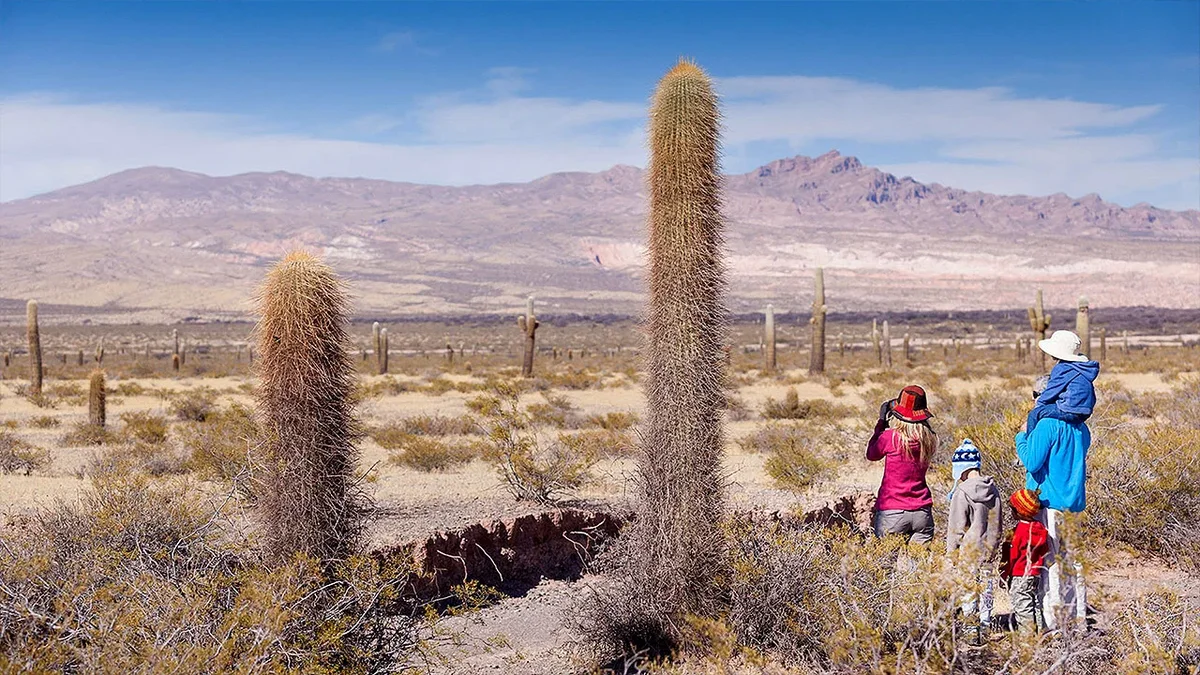
Salta is the colonial city at the foot of the Andes where Argentina turns Andean: mountains striped in seven colours, salt flats at four thousand metres and the wine valley of Cafayate. Two hours by air from Buenos Aires, a direct flight from the Iguazú Falls, and a different country from the one you landed in.
Flights, hotel, airport transfers and the days you choose, quoted as one price. This is how 01Argentina works: we do not sell loose excursions, we build the whole trip and stand behind it.

The city tour of colonial Salta, a full day to Salinas Grandes and Purmamarca, and a full day to the wine valley of Cafayate, with three nights in Salta and flights from Buenos Aires.
More ›
The falls and the Andean north-west in one trip: Iguazú first, then the direct flight to Salta, with hotels, transfers and the excursions in both.
More ›
Three days with a private guide and car throughout and a five-star hotel two blocks from the main square. Arranged by our luxury division at 01argentina.travel.
More ›
The hotels we use in Salta, from three-star colonial houses to five-star, all in the centre and all included in a package with flights, transfers and your days.
More ›These are day tours you can add to any of the packages above — not trips on their own. If you decide to extend your stay in Salta, this is what we would put in the extra days.
Three or four nights is the usual answer. The city takes an afternoon; Salinas Grandes with Purmamarca, Cafayate and the Quebrada de Humahuaca are each a full day, and they go in different directions, so every one you want is a night more.
Two nights gives you the city and one big day. Five or six makes sense if you want Cachi, Iruya or the Train to the Clouds as well, or a night in the Quebrada instead of coming back to Salta every evening.
If you have one day, Salinas Grandes and Purmamarca: the salt flats, the pass and the Hill of Seven Colours in one go. If you have two, add Cafayate, which is the opposite direction and the opposite landscape, red canyon and vineyards. With three, the Quebrada de Humahuaca up to Tilcara and Humahuaca.
Cachi, Iruya and the Train to the Clouds are for travellers with more time, or who have been to the north-west before.
Salta city is at 1,187 metres, which nobody notices. The day tours climb: Cafayate stays low, Humahuaca reaches about 3,000, the Salinas Grandes day crosses a pass above 4,000, and the Train to the Clouds and Iruya go to 4,200.
Most travellers feel a headache or breathlessness at most. Drink water, eat lightly, go easy on wine the night before, and tell your guide if you feel unwell. If you have a heart or lung condition, talk to your doctor before booking the high days, and we put the lower ones first in your itinerary.
April to November, the dry season: clear skies, the best colour on the mountains and cool nights. July is the busiest month, with the Argentine winter holidays.
Summer, December to March, is the rainy season: green and warm, with afternoon storms that can close a mountain road for a few hours. Carnival in the Quebrada, in February or March, is the exception worth the rain.
Yes, with a short pause around the New Year, but not every day: it leaves on set days of the week, a few times a week, and it fills up early, especially in July. As a high-mountain excursion it can also be cancelled on the day for bad weather. It is the one day in the north-west we ask you to book well ahead.
Both, and both are common. There are direct flights between Salta and Iguazú, which is why the two-destination package exists. Mendoza is reached through Buenos Aires, or by the long road south through the Calchaquí Valley for travellers with time.
Write to us with your dates, how many of you are travelling and roughly what you want out of the north-west — the landscapes, the colonial towns, the wine, or all three.
We come back within 24 hours with a proposal written for you, with the days laid out and everything priced as one figure. Nothing is booked until you are happy with it.
See all our Salta and Jujuy travel questions: the best season, altitude, the trains and more ›
Everything south of here is pampa and Patagonia; Salta and Jujuy look north, to Bolivia and the high Andes. The towns are colonial, the music is the zamba and the chacarera, the food is empanadas and locro, and the people in the villages of the Quebrada are Kolla, with the same language and the same markets their grandparents had.
The landscapes are the reason most travellers come. The Quebrada de Humahuaca is a UNESCO World Heritage valley of mountains striped in red, green and violet; Salinas Grandes is a white salt flat at the top of a pass; Cafayate is a wine valley reached through a red canyon; and the Train to the Clouds climbs to a viaduct at 4,220 metres. Each is a day from the city, and each goes in a different direction, which is why the number of nights decides the trip.
Tell us your dates and how many of you are travelling and we lay the days out in the right order, the low ones first and the high ones once you are used to the altitude, and quote flights, hotel and transfers as one figure. We have been arranging trips across Argentina since the year 2005, and one person handles yours from the first email to the last day.
Free quotation within 24 hours, with no obligation. Tell us your dates, how many of you are travelling and which of the big days you have in mind, and we will come back with the trip laid out and everything priced together.
Salta is almost always one leg of a longer route. These are the ones it pairs with most often.

The city you fly into, and the one Salta is paired with on almost every trip.
See Buenos Aires tours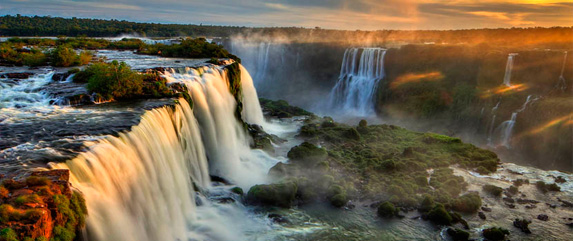
A direct flight from Salta, and the natural second stop on a trip to the north.
See Iguazú tours
The itineraries travellers actually book most often, several of them with Salta inside.
See all itineraries