Two of the things people come to Ushuaia for, in one morning: a steam-hauled train that convicts built to haul firewood a century ago, and the only national park in Argentina where the forest runs into the sea. It ends at a wooden sign in Lapataia Bay that tells you how far you are from Alaska.
Five hours from your hotel door, every day of the year.
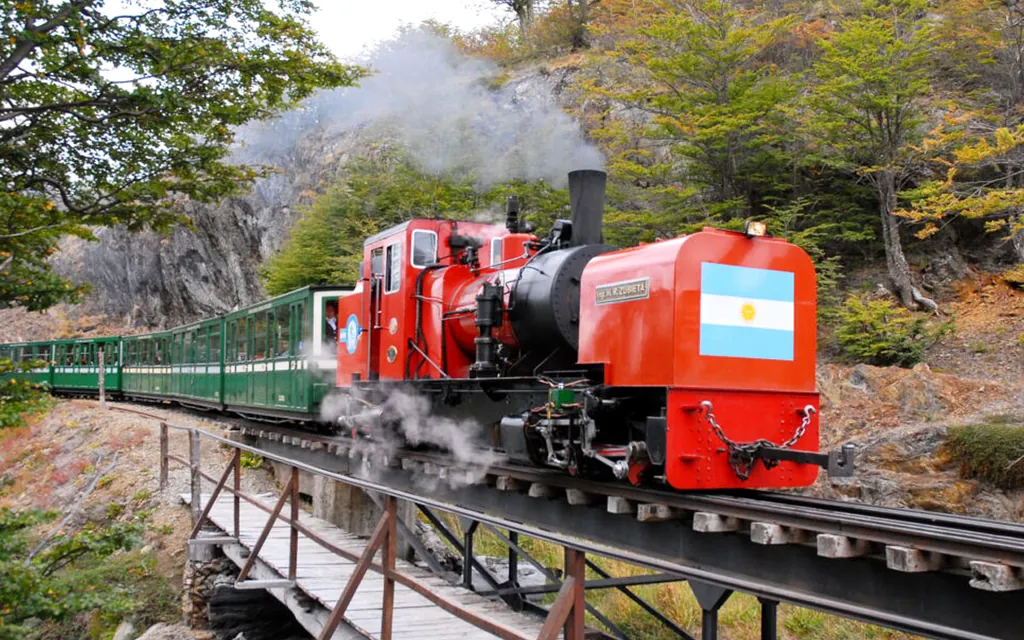
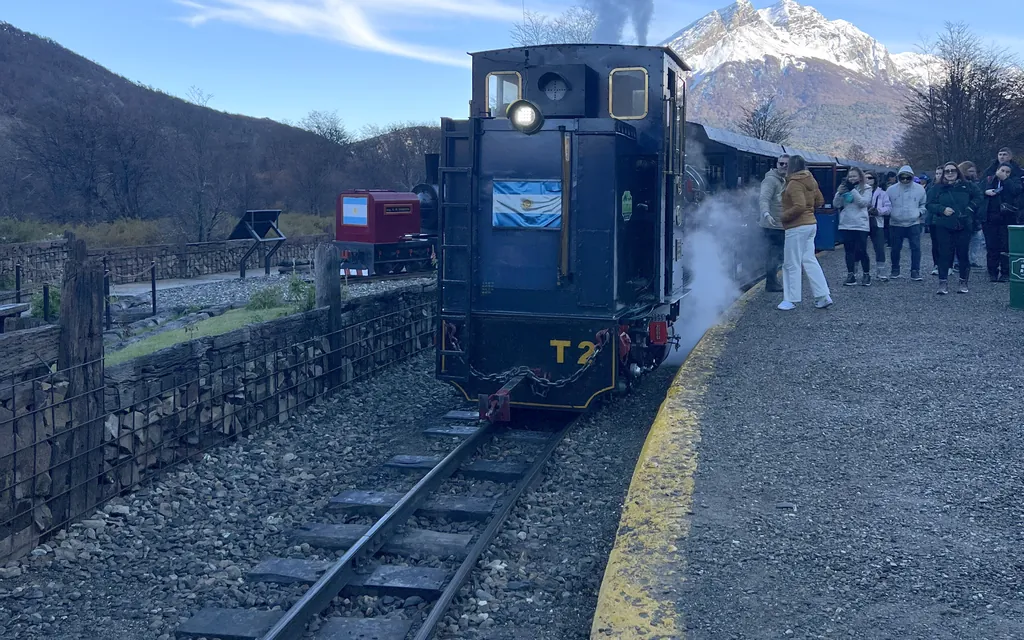
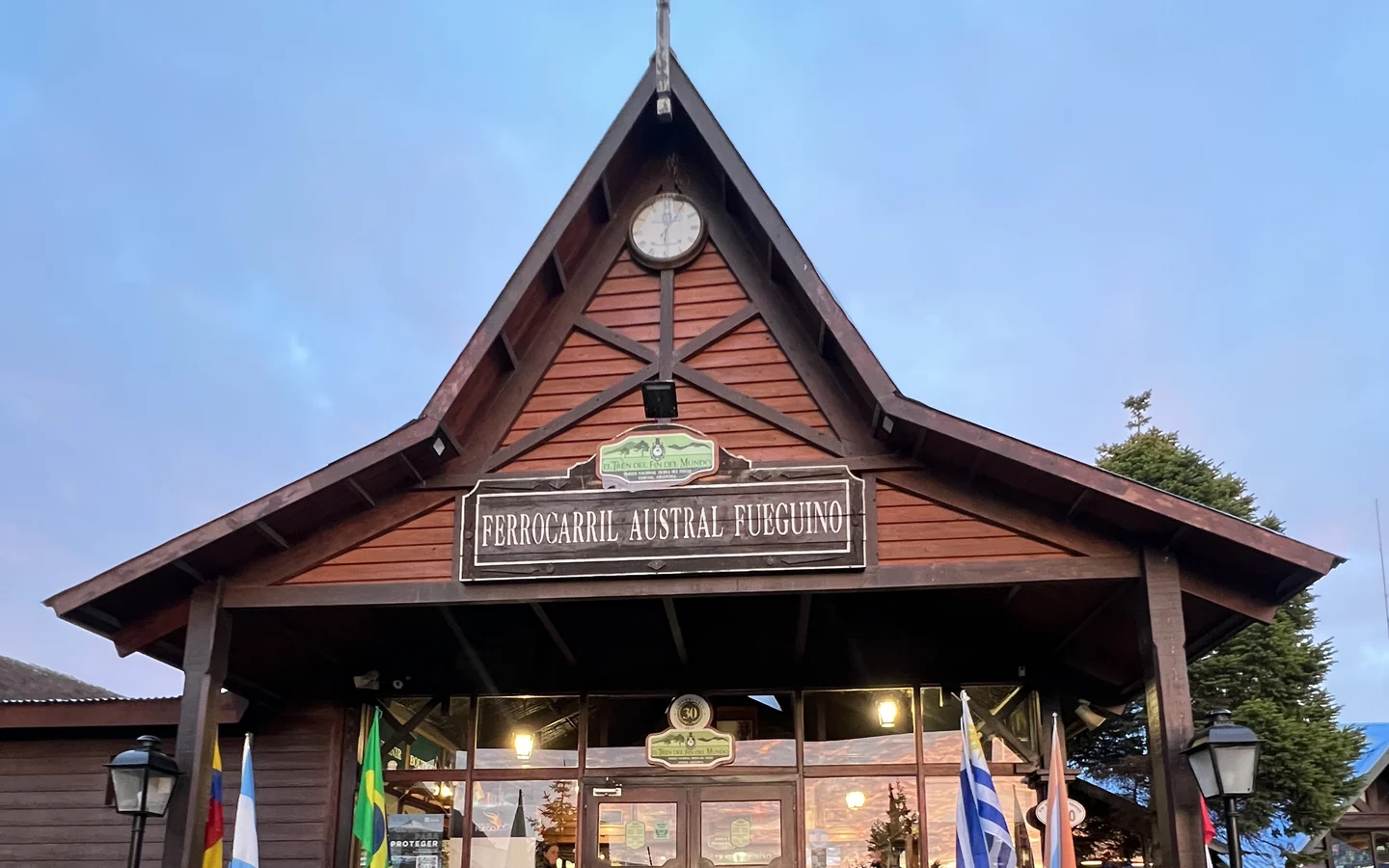
The End of the World Train is not a tourist novelty that someone invented for the brochure. The line was laid in 1909 by the inmates of the Ushuaia prison, who rode it out into the forest every morning to cut the firewood and timber that built the town. It ran until 1947. What you travel on today is the restored western section of that same route.
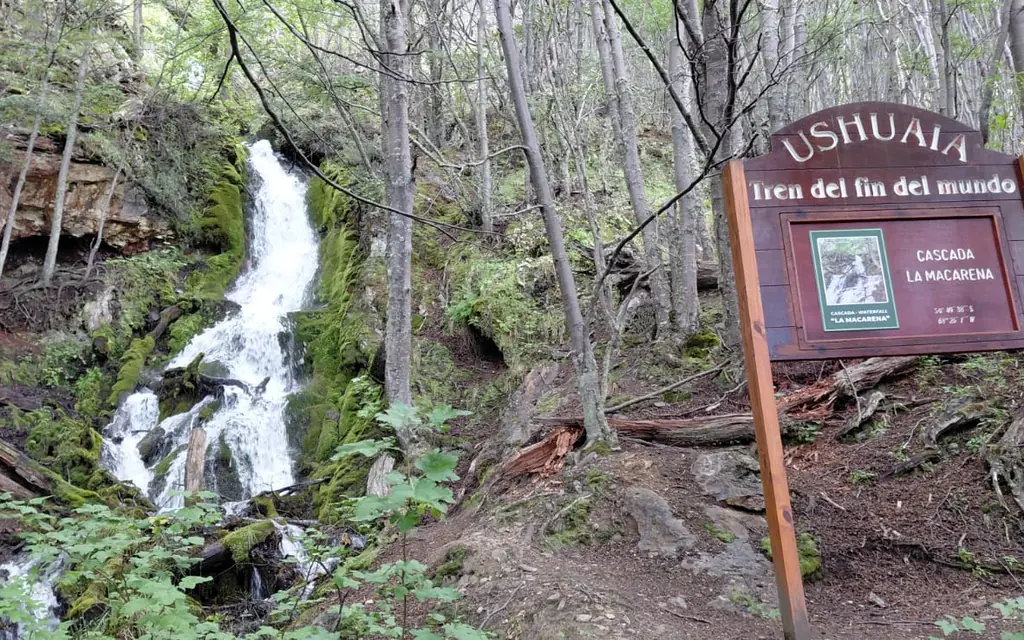
You board at the End of the World Station, about eight kilometres west of Ushuaia, and the ride is roughly seven kilometres and an hour into the national park. The convoy crosses the Pipo river on wooden bridges, runs through peat bog and lénga forest, and stops at the La Macarena waterfall, where you get out.
It is a small, slow, narrow-gauge train, and that is the point. It is not a scenic express — it is a working relic of a penal colony, with commentary, running through the landscape the prisoners cleared. If you know that before you board, you enjoy it a great deal more.
Look out of the window on the way and you will see them: tree stumps, cut flat, scattered across the open ground for kilometres. They are what is left of the lénga forest the prisoners felled, and the axe marks are still visible on some of them.
The subantarctic forest at this latitude grows extremely slowly — a lénga can take a century to reach any size — so a hundred years later the ground has still not closed over. It is the single most striking thing about the ride, and most visitors have no idea what they are looking at.
Your guide will point them out. It is also the moment the park stops being scenery and starts being a place with a history.
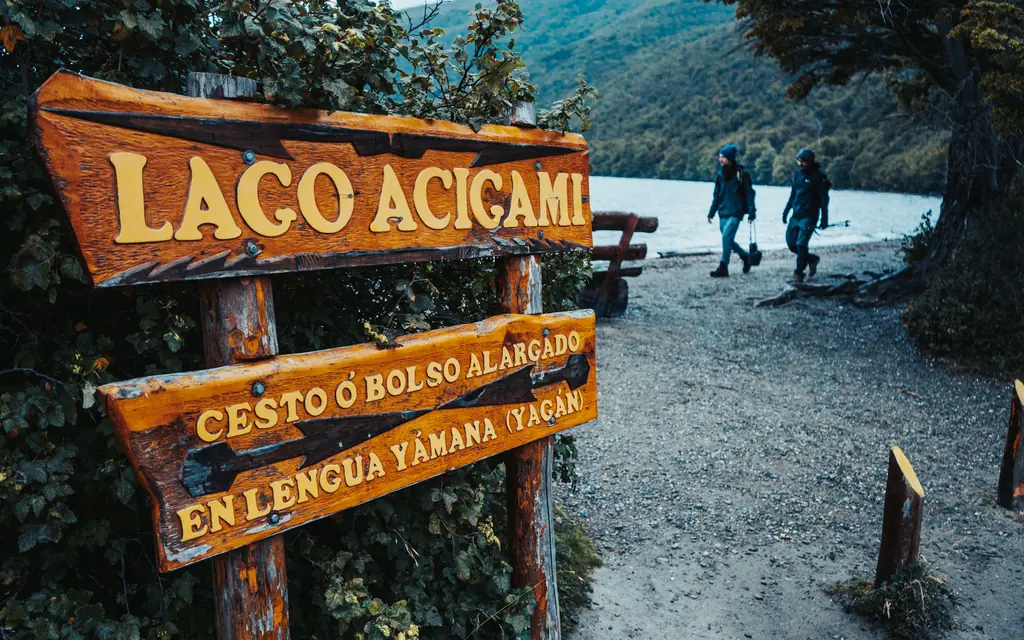
After the train you rejoin your guide and vehicle and continue into the park proper: Ensenada Bay looking across the Beagle Channel to Chile, Lake Acigami (still called Lake Roca by most people), the beaver dams, and the boardwalks that carry you over the peat without damaging it.
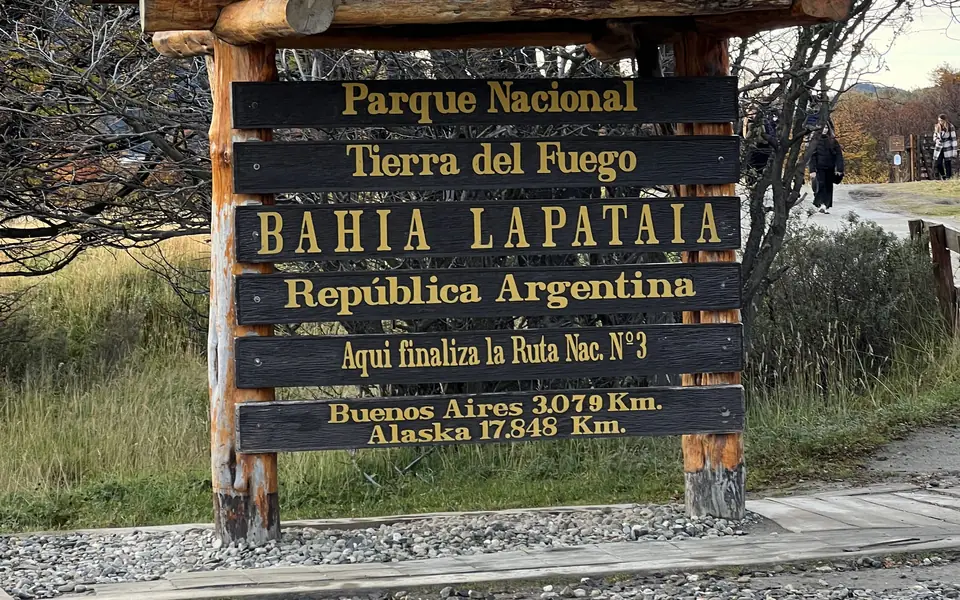
The last stop is Lapataia Bay, and it is the one people photograph. A wooden sign there records that this is where National Route 3 ends — the Argentine leg of the Pan-American Highway. It gives two distances: Buenos Aires 3,079 km, and Alaska 17,848 km.
For a North American traveller that is a strange and rather good moment: the same road that starts near your own country finishes here, at a bay full of birds, with nothing beyond it but water and Antarctica.
Around 08:00
Collection from your hotel or apartment in Ushuaia. The park gate is twelve kilometres west of town, along National Route 3 through the Pipo river valley.
First stop
Time at the station and its buildings before boarding — this is where the prison train was loaded, and where the restored line begins today.
About 1 hour, 7 km
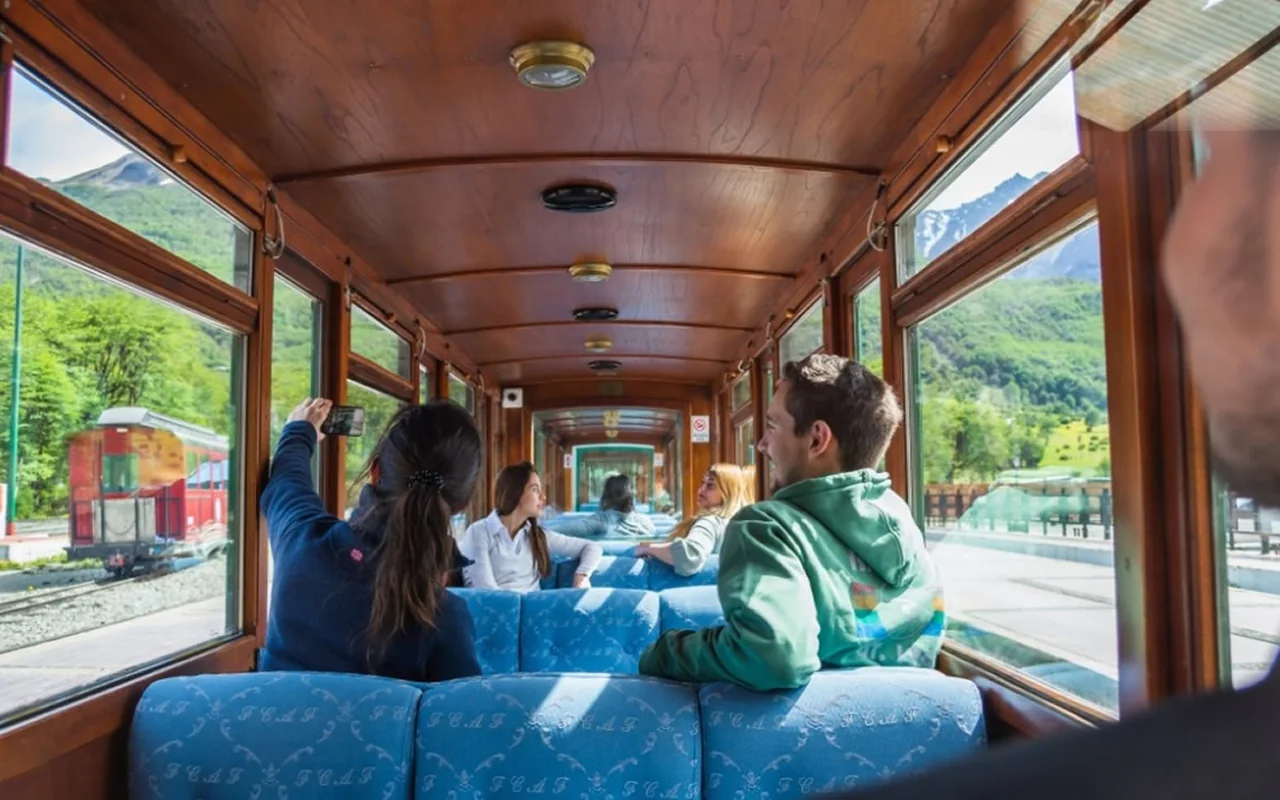
Through peat bog and lénga forest, across the wooden bridges of the Pipo river, with commentary. The windows are large and the carriages are heated.
Mid-route stop
The train stops and you get out. A short climb to the viewpoint, a waterfall coming off the mountain, and the reconstruction of a Yámana shelter of the kind that stood here before any of this existed.
Rejoining the guide
The train ends at Park Station, where your guide and vehicle are waiting. From here the tour continues by road with stops and short walks.
Two viewpoints
Ensenada looks across the Beagle Channel to the mountains of Chile. Lake Acigami — Lake Roca — sits against the border, with the beaver dams along the shore.
The end of Route 3
The last stop, and the one everyone photographs: the sign marking the end of the Pan-American Highway, and the boardwalks out over the bay.
Around 13:00–13:45
Drop-off at your accommodation, with the whole afternoon still ahead of you.
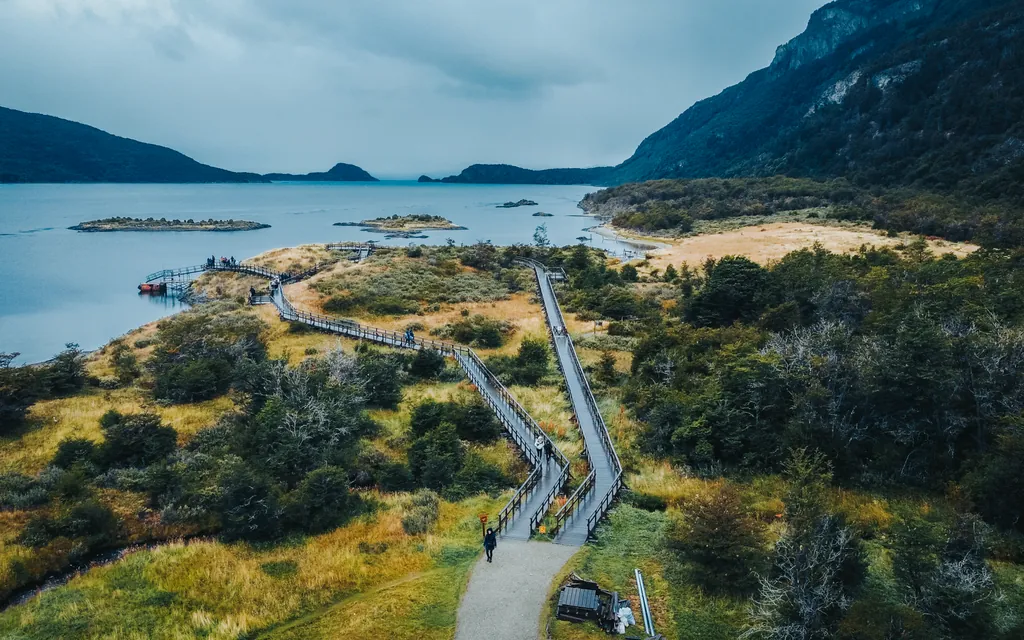
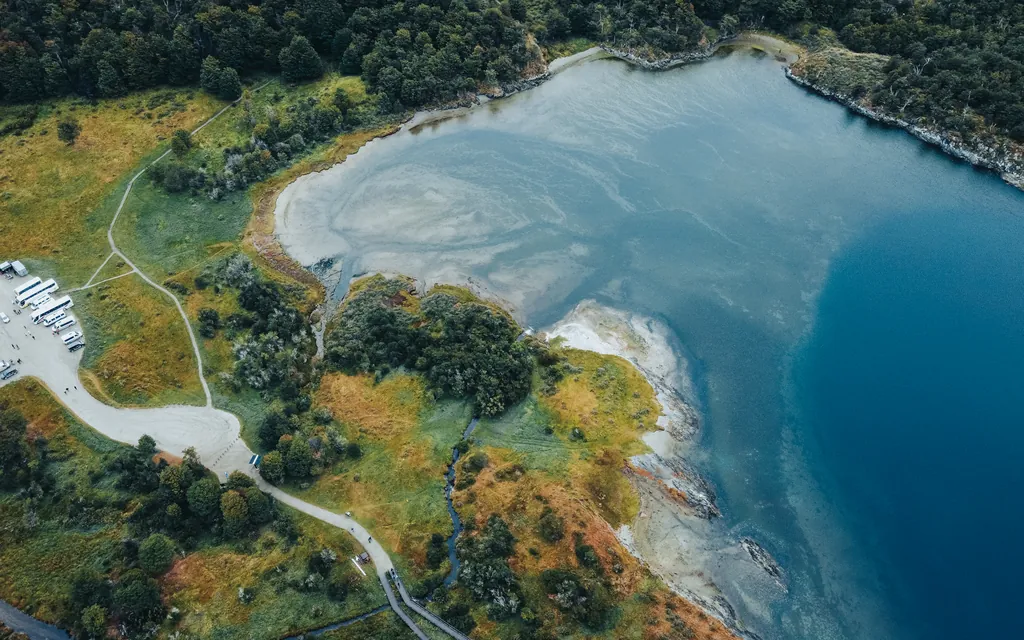
Lapataia Bay from above: the boardwalk runs down to the water, and where it stops, so does National Route 3.
Read the right-hand column too — the park entrance fee catches people out.
This matters more than it sounds. Plenty of park tours do not include the railway, and plenty of travellers buy a train ticket on its own and then find they have no way of getting to the station or of seeing the rest of the park. Here it is one booking and one vehicle.
The railway and the park are eight kilometres apart and most people want both. Doing them together takes about five hours and leaves your afternoon free — which in Ushuaia, where the light lasts until late in summer, is worth having.
Sixty-three thousand hectares where subantarctic forest, mountains and the sea meet in the same reserve. There is nowhere else in the country where you can stand in a lénga forest and watch the tide go out.
Lapataia is the finish of National Route 3, and the sign says so, in kilometres, with Alaska on it. It is the photograph people actually keep from Ushuaia.
Unlike most of what happens at the end of the world, this one does not have a season. In autumn the forest turns red; in winter the whole park is under snow and the train runs anyway.
Legajo EVT 17869, ASTA member 900202085, an office in Buenos Aires and over twenty years arranging trips across Argentina. One person answers you, start to finish.
No, and this is the thing people get caught out by. The entrance fee to Tierra del Fuego National Park is set by the park authority, changes with the season, and is paid at the gate on the day. It is not included in this tour and no operator can include it.
Take a means of payment with you. We tell you the current amount when we send your quotation so that nothing about it is a surprise at the barrier.
About seven kilometres and roughly an hour, at walking-and-a-bit pace. If you are expecting a long scenic rail journey through Patagonia, this is not that, and we would rather say so.
What it is: the southernmost working railway on earth, running on the line the convicts of the Ushuaia prison built in 1909 and used until 1947, through the forest they cut down. Ride it for the history and the stumps and it is one of the most memorable hours in Ushuaia. Ride it expecting speed and scenery alone and you will wonder what the fuss is.
Yes. There is a version of this excursion that goes straight into the park by road, spends longer at the viewpoints and costs less, because the railway is the expensive part.
There is also a more active day that swaps the train for a 7 km coastal trek and a canoe paddle down the Lapataia river, with lunch in a dome. Tell us which appeals and we will quote whichever fits.
It marks the end of National Route 3 — the Argentine section of the Pan-American Highway — and it carries two distances: Buenos Aires 3,079 km and Alaska 17,848 km.
It is a wooden board on a post at the edge of a bay, and it is probably the most photographed object in Tierra del Fuego. There is usually a short queue for it, and it is worth the wait.
Yes, every day of the year. The train has heated carriages and the park roads are cleared.
Winter is arguably the better version: snow to the waterline, hardly anyone else on the boardwalks, and about seven hours of low golden daylight. Autumn, from late March, is the other one to aim for — the lénga forest turns deep red and the photographs are extraordinary.
Yes to both, within reason. The train does the first part sitting down, and the walks inside the park are short, level and mostly on wooden boardwalks built over the peat.
Nothing on this tour is strenuous. If someone in your group uses a wheelchair or cannot manage steps, tell us when you enquire and we will confirm exactly which stops work rather than guess.
A windproof jacket, whatever the forecast says. The park is on the Beagle Channel and the wind comes off the water; it is always several degrees colder at Lapataia than in town. Closed shoes with grip, a hat, and a warm layer in any season.
Also cash or a card for the entrance fee, and more camera battery than you think. Cold drains it fast.
Very likely, and it is not the dramatic kind. The park has more than ninety bird species, including upland geese, kelp geese, austral parakeets and the enormous Magellanic woodpecker if you are lucky. Red foxes and guanacos are around but shy.
What you will certainly see is beaver damage — flooded valleys and rings of dead trees. Beavers were introduced from Canada in 1946 to start a fur trade that never happened, and with no predators here they have reshaped the whole island. It is a good story and a cautionary one.
If you only do one organised thing at the end of the world, we think it should be this, and the reason is not the train. It is that this half day gives you the shape of the place: how the town got here, what it was built on, and where the continent actually stops.
Ushuaia is easy to experience as a checklist — a boat, a sign, a hill, a plate of king crab. The national park is where it turns into somewhere. You ride out on a line that convicts laid, past a forest they cut down that has still not grown back, into a reserve where the lénga runs down to the tideline, and you finish standing at the end of a road that begins in Alaska. Everything else you do in Ushuaia makes more sense afterwards.
It runs every day of the year and takes about five hours, so it fits on an arrival day, a departure day, or the morning before a Beagle Channel afternoon. Send us your dates and how many of you there are, and we will tell you where it fits best in your week.
Free quotation within 24 hours, with no obligation. Tell us your dates and how many of you are travelling and we will confirm availability, the current park entrance fee, and how this morning fits with the rest of your time in Argentina.
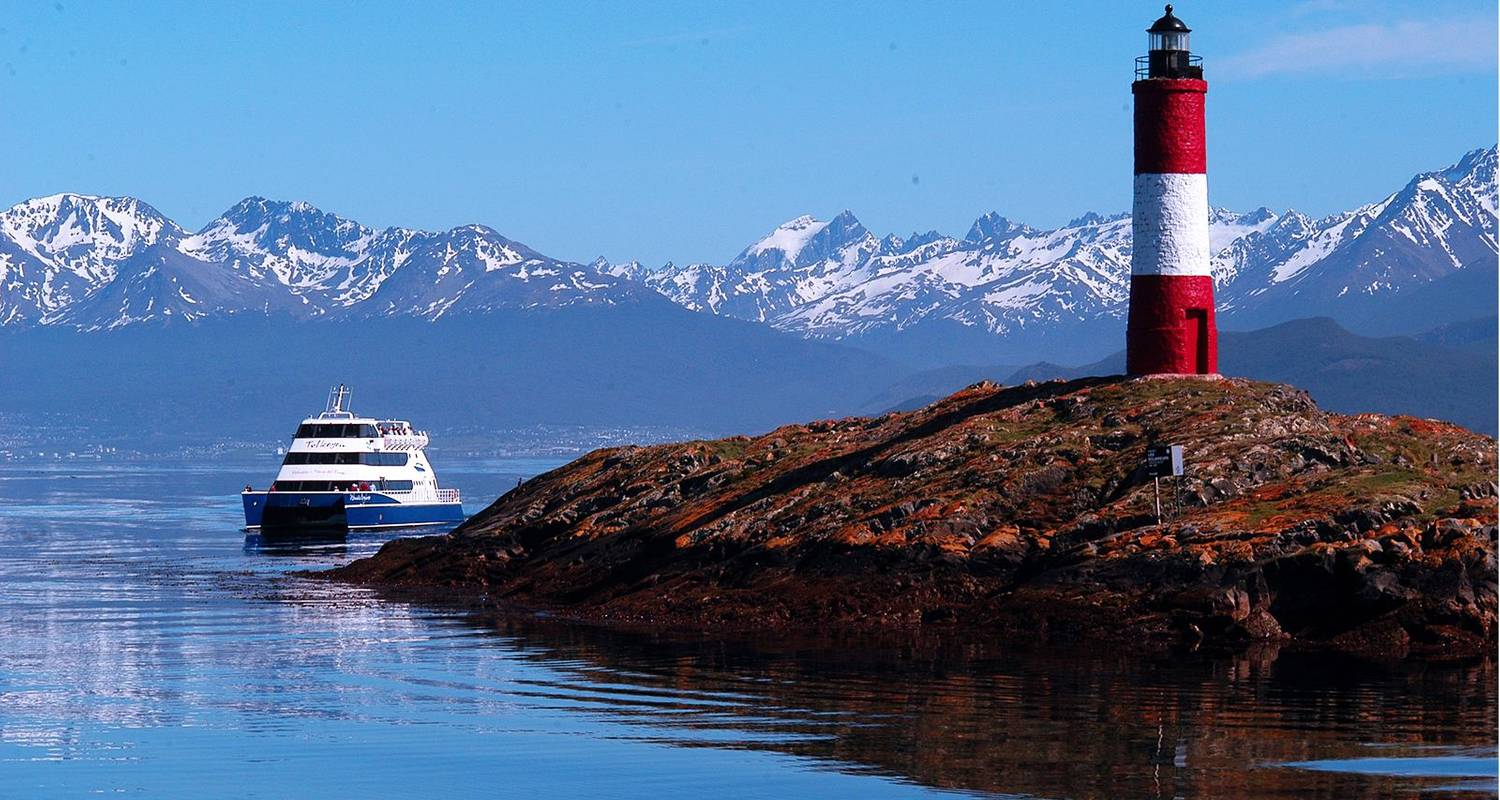
Everything we run at the end of the world, from half-day outings to full packages with flights.
See all Ushuaia tours →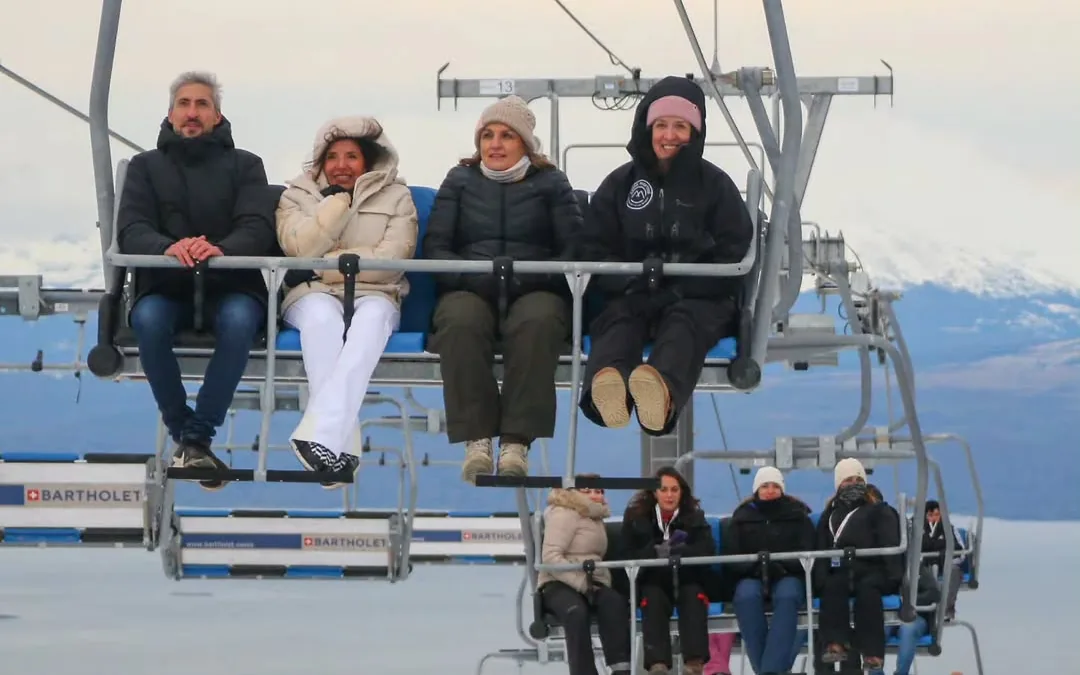
The afternoon that pairs with this morning: the new chairlift and the best view over the town and the channel.
More information →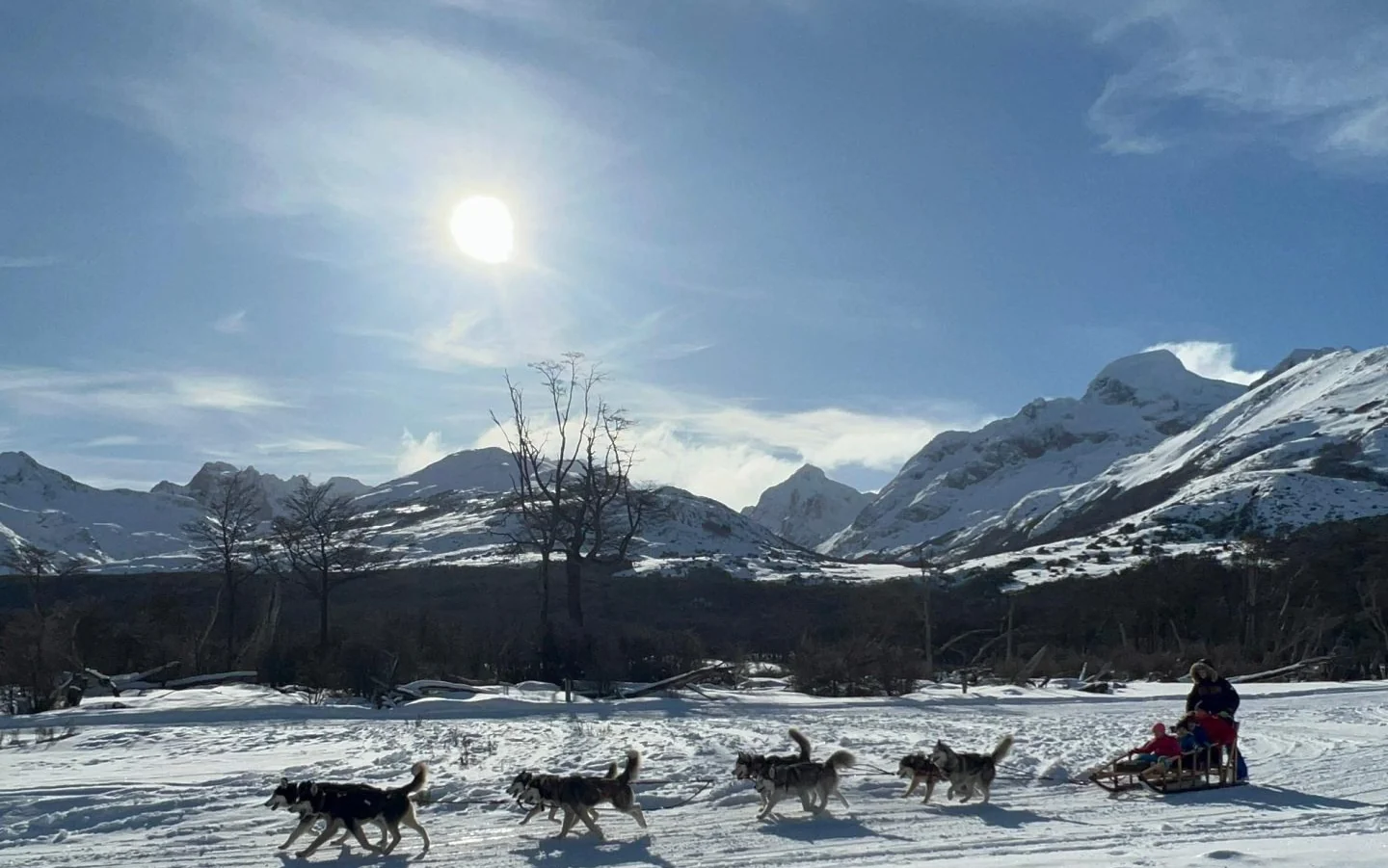
If you are here between June and September: huskies, snowmobiles and snowshoes in the Tierra Mayor valley.
More information →