In February 1877 Francisco "Perito" Moreno walked out to a sandstone headland on Lago Argentino and found the cliffs covered in painted signs. It was the first rock art ever scientifically recorded in Argentina, and he named the place Punta Walichu. This half day takes you there — and then back through the town that grew up beside it.
Almost everyone comes to El Calafate for the ice. This is the afternoon that tells you who walked this shore first, how the landscape was built, and why a town exists here at all — and it costs you nothing but a spare half day.
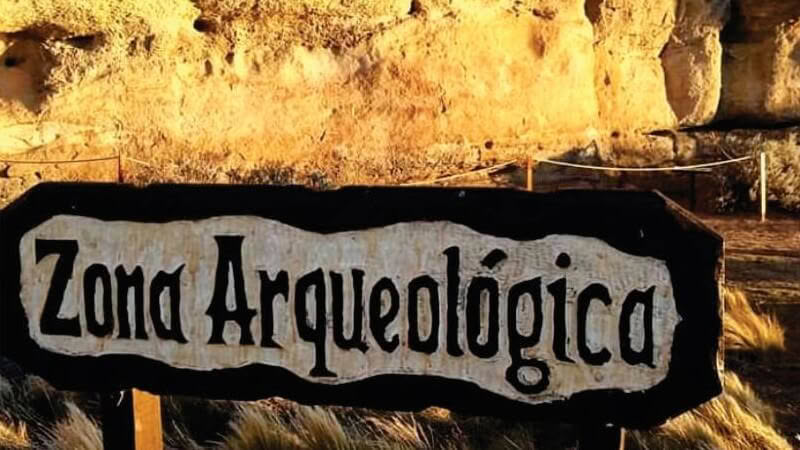
Perito Moreno reached this lake on 15 February 1877 and named it Lago Argentino. Four days later he walked out to a headland on its shore and wrote in his diary that the vertical bluffs were covered in signs traced by the hand of man. He sketched them, and named the point Punta Walichu. It is regarded as the first scientific description of rock art in Argentina.
The site is a line of wind-carved sandstone overhangs — shallow shelters rather than true caves — strung along the lake shore about 8 km east of town. The painted panels include human and human-animal figures, animal tracks, hands in both stencil and print, and unusual labyrinth designs. Your guide walks the trail with you and reads them out; on your own, most visitors walk straight past them.
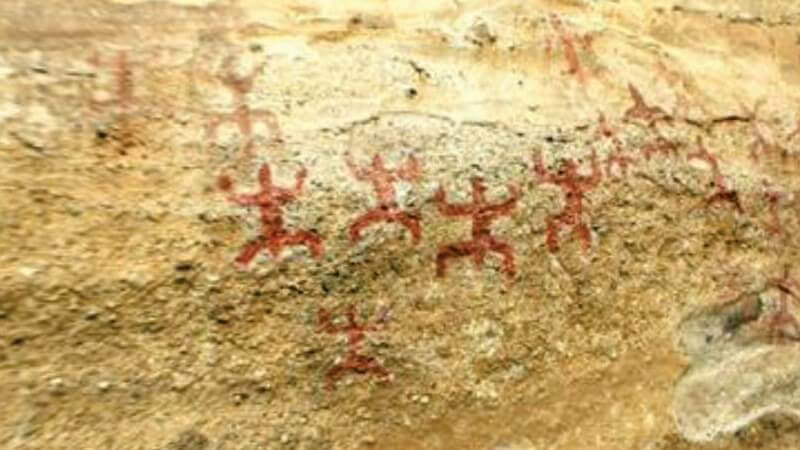
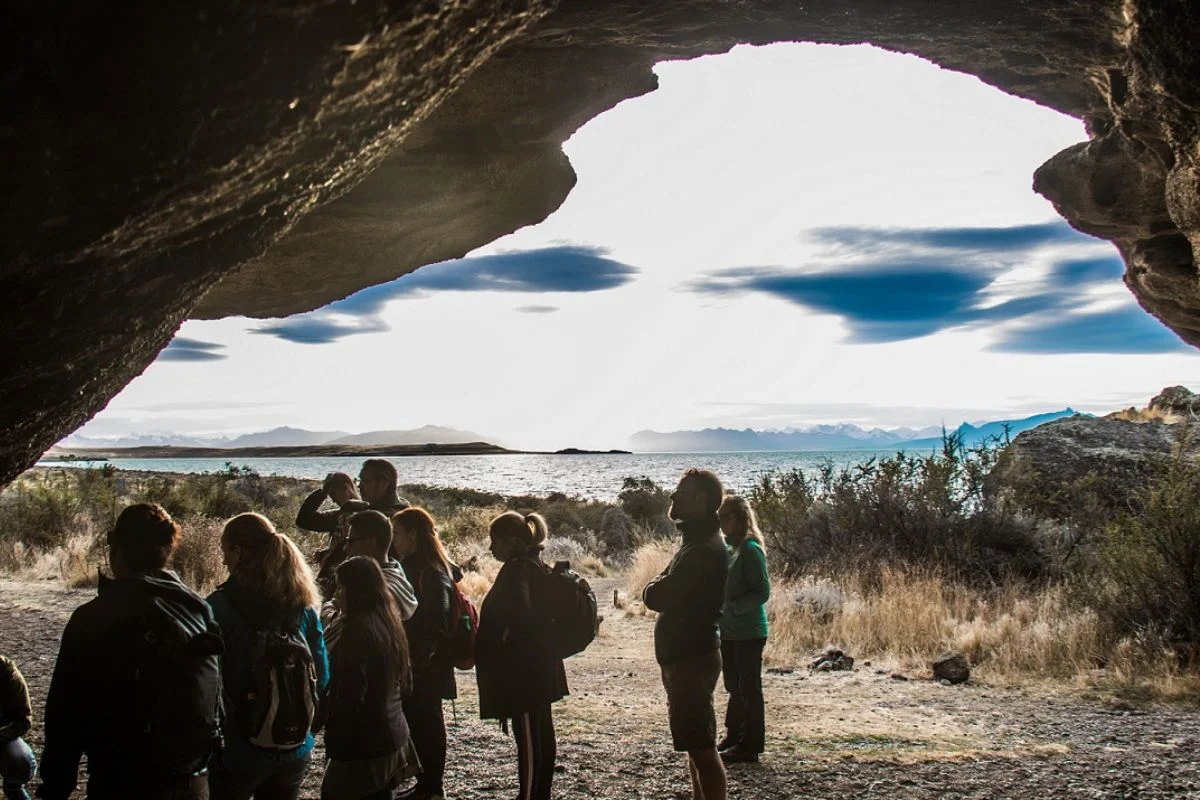
Walichu — also written Gualicho — was the malevolent spirit of Tehuelche and Mapuche belief: the personification of illness, harm and bad luck. It was thought to inhabit striking, solitary features of the landscape — caves, isolated boulders, ancient lone trees, narrow passes — which is precisely why a painted rock promontory on an empty shore carries the name.
Spanish missionaries flattened it into "the Devil", which it never was. The word survives in everyday Argentine Spanish: to hacer un gualicho is to put a hex or a love-spell on someone.
The town was laid out by national decree on 7 December 1927, but it began earlier and smaller: a parador, a staging post on the ox-cart wool route, chosen for its water and for the big calafate bush that gave it its name. The circuit runs through the old quarter and past the pioneer buildings — among them the Primera Casa del Pueblo, built of brick and adobe around 1908, and the La Anónima store, whose entire building was hauled here by animal traction in 1924.
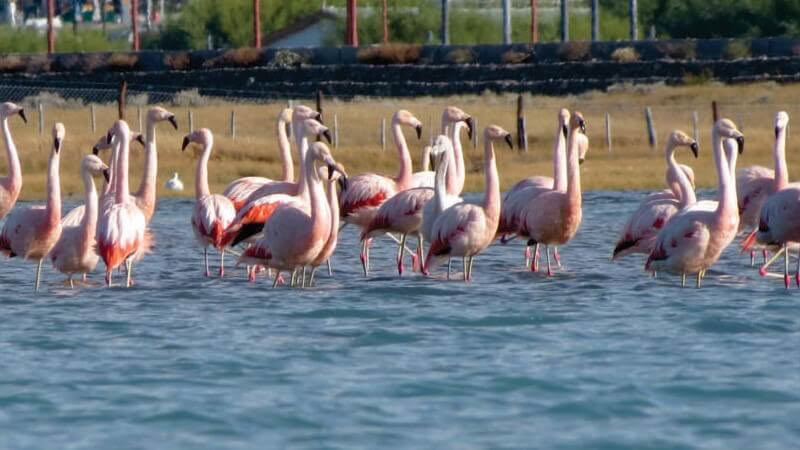
Then down to Bahía Redonda, the bay of Lago Argentino in front of town. These wetlands are an internationally recognised Important Bird Area: Chilean flamingos, black-necked and coscoroba swans, upland geese, and sandpipers that migrate here from breeding grounds in the United States, Canada and Greenland.
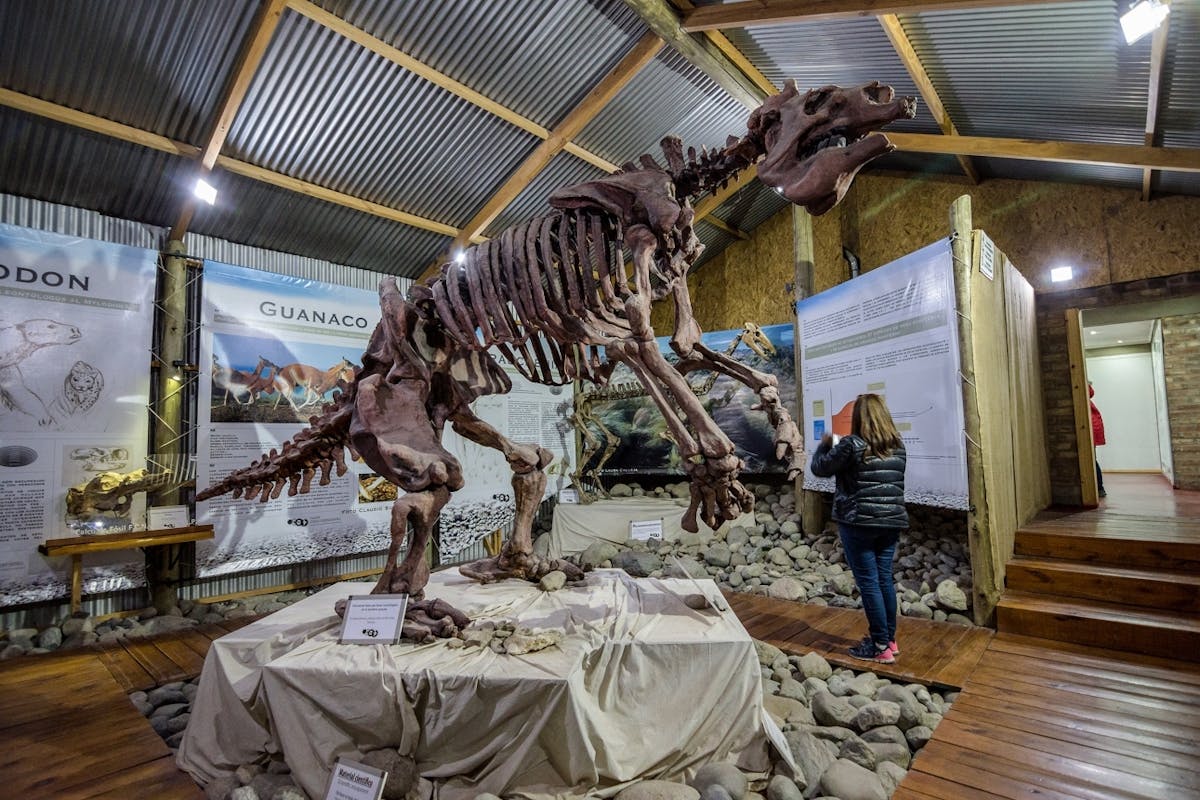
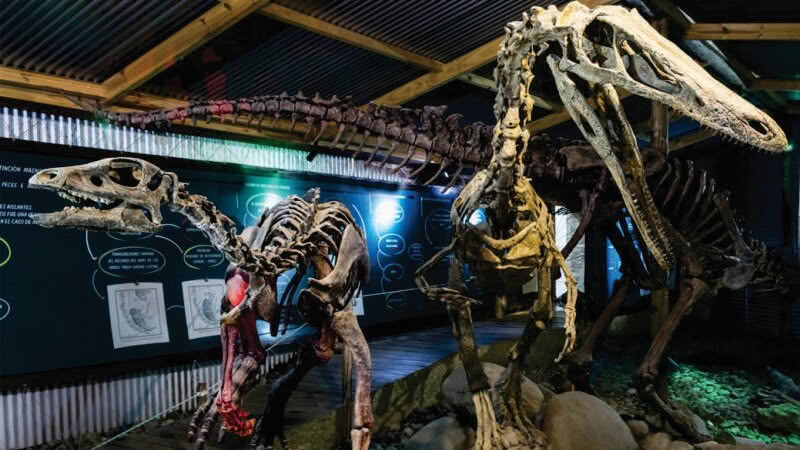
The last stop is the Historical Interpretation Centre, a self-guided museum that runs the whole timeline of this corner of Patagonia in one visit — from roughly 100 million years ago to the present. Mounted Patagonian dinosaur skeletons and casts of Ice Age megafauna like Megatherium, the giant ground sloth, share the building with the story of Tehuelche culture, first contact, the sheep-ranching boom and the Patagonian strikes of 1921–22. Panels are in Spanish and English.
The dinosaurs are not decoration: this is genuinely fossil country. Nullotitan glaciaris, a giant titanosaur, was dug up about 30 km south-west of El Calafate and named glaciaris because the Perito Moreno Glacier is visible from the excavation. Another local species, Talenkauen, takes its name from the Aonikenk words for "small skull".
We collect you from your hotel in El Calafate. Departure times shift with the season — we confirm yours when we quote.
A guided walk along the sandstone overhangs on the lake shore, 8 km east of town.
Through the old quarter, the pioneer buildings and the present-day civic centre.
The lake-shore promenade, with the waterbirds that make this an Important Bird Area.
A self-guided visit through 100 million years of Patagonia, then back to your hotel.
Tell us your dates and how many of you there are — we'll check availability and send a free, no-obligation quote within 24 hours. Best price guaranteed.
One dedicated specialist plans your whole stay — not a booking platform with a call centre.
Three hours here and the glacier, the steppe and the estancias all stop being scenery and start being a place with a history.
One person builds your whole Argentina itinerary — not a platform with a call centre.
We collect you and bring you back, in heated, air-conditioned vehicles — it matters here.
The rock art is subtle and the town's history is invisible without someone to point at it. That is the whole value of this tour.
It fits neatly around a glacier day, an estancia day or an evening flight.
A registered agency with two decades organising trips across Argentina.
The tour lasts about 3 hours. Departure times change with the season — in the warmer months there are usually morning and afternoon departures, and in winter a single afternoon departure. We confirm the exact time for your dates when we send your quote.
It is an archaeological site on the shore of Lago Argentino, about 8 km east of El Calafate: a line of wind-eroded sandstone overhangs whose walls carry rock art left by the ancient hunter-gatherers of Patagonia, ancestors of the Tehuelche. The name comes from Perito Moreno, who recorded the site in 1877.
It is commonly dated to around 4,000 years old. Punta Walichu has never been the subject of a published excavation with radiocarbon dates, so treat that figure as the accepted estimate rather than a laboratory result — your guide will explain what is known and what is not.
Walichu, or Gualicho, was a malevolent spirit in Tehuelche and Mapuche belief — the personification of illness and misfortune. It was believed to live in caves, isolated rocks and ancient solitary trees, which is why this painted headland carries the name.
No — they are different sites, and far apart. The Cueva de las Manos, the UNESCO World Heritage site famous for its walls of overlapping hand stencils, is in the Río Pinturas canyon in northern Santa Cruz, roughly 600–700 km from El Calafate by mostly gravel road. It is not a day trip from here. Punta Walichu is a smaller lakeside site with its own history, reachable in twenty minutes.
The walking is easy — short, mostly level trails at Walichu and a stroll through town. The tour is suitable for all ages. It is not wheelchair accessible and is not suitable for travellers with significantly reduced mobility; tell us in advance and we will suggest alternatives.
A self-guided museum covering roughly the last 100 million years of this region: mounted Patagonian dinosaur skeletons and casts of Ice Age megafauna, the glaciations that shaped the landscape, Tehuelche culture and first contact, the sheep-ranching era, the Patagonian strikes of 1921–22 and the founding of El Calafate. Panels are in Spanish and English.
It depends on the season, but the regulars are Chilean flamingos, black-necked swans, coscoroba swans, upland geese, ducks and coots. The shore is also a stopover for long-distance migrant sandpipers that breed in North America and Greenland. Bring binoculars if you have them.
From hotels, hosterías, hostels, apart-hotels and cabin complexes with 24-hour reception. If you are staying in a short-term rental apartment without a reception desk, send us the address and we will arrange a nearby pick-up point.
Comfortable walking shoes, sunglasses, sunscreen and a cap in summer — and a warm layer whatever the forecast says, because the wind here is relentless. In winter add a hat, gloves and a waterproof jacket. A camera and binoculars are worth carrying.
Often yes, and it is a good combination: the glacier in the morning, Walichu and the town in the afternoon. It depends on the glacier departure you take — tell us your dates and we will build the day for you.
Yes, the tour operates with a minimum of two passengers. If you are travelling solo, tell us and we will quote you the private option or find you a departure that is already confirmed.
The Perito Moreno Glacier, El Chaltén, Ushuaia and the whole of Argentine Patagonia.
See all →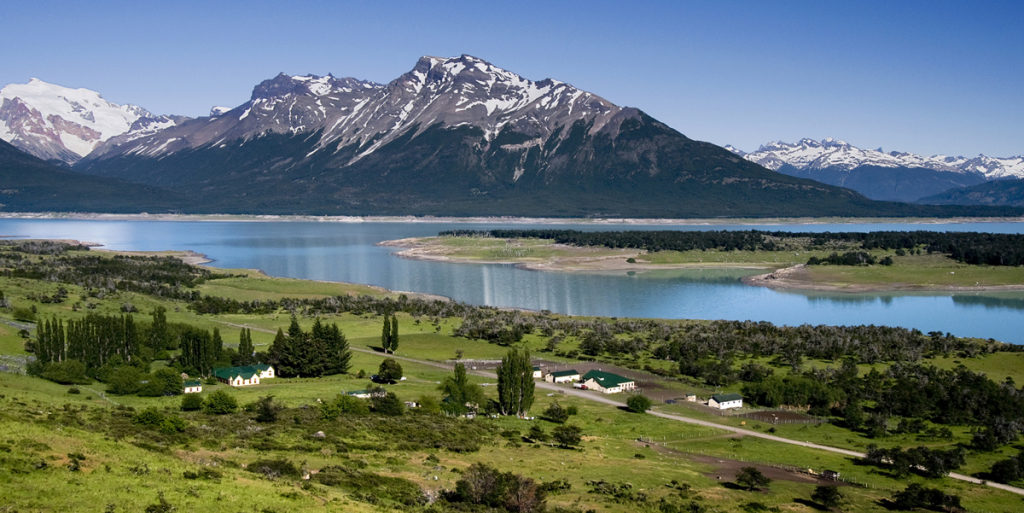
A full day at a working ranch inside Los Glaciares National Park, with a Patagonian lamb asado.
More information →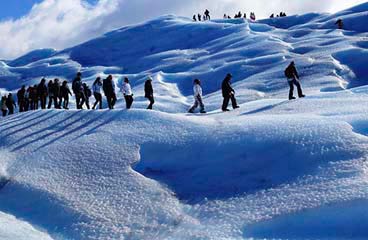
Walk on the ice, sail among the icebergs and stand before the world's most famous glacier.
More information →El Calafate sells itself on ice, and rightly so. But travellers who give the town half a day almost always say the same thing afterwards: the glacier meant more once they knew whose country they were standing in.
Punta Walichu is not a spectacle. It is a low line of sandstone overhangs on a windy lake shore, with faint painted signs under them and a view straight across Lago Argentino to the Andes. What makes it worth the trip is that people stood exactly there, painting, thousands of years before anyone thought to look for a glacier — and that the first outsider to write about it was Perito Moreno himself, in February 1877, four days after he named the lake.
Paired with the old town, the lake-shore birds and a museum that runs from the dinosaurs to the 1920s in one building, it makes a compact, easy, genuinely interesting half day — and it slots around whatever else you have booked. Tell us your dates and we will send a free quote within 24 hours.