A million people a year look at this glacier from the boardwalks, safely above the lake. A few hundred see it the other way: at water level, in a sea kayak, small enough to feel the size of it. Ninety minutes of paddling across the Iceberg Channel, and two hours on the boardwalks afterwards.
You can be told the ice wall is 74 metres high and five kilometres wide. From a boardwalk it still looks like a postcard. From a kayak, with your hands brushing that same water, it stops being a number and becomes a presence.
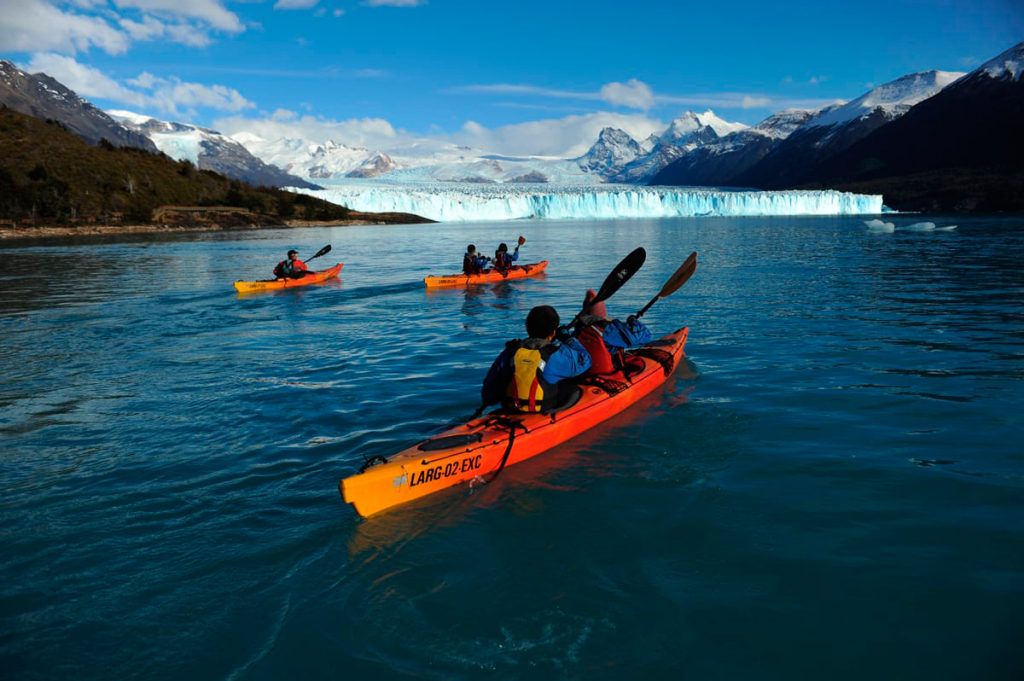
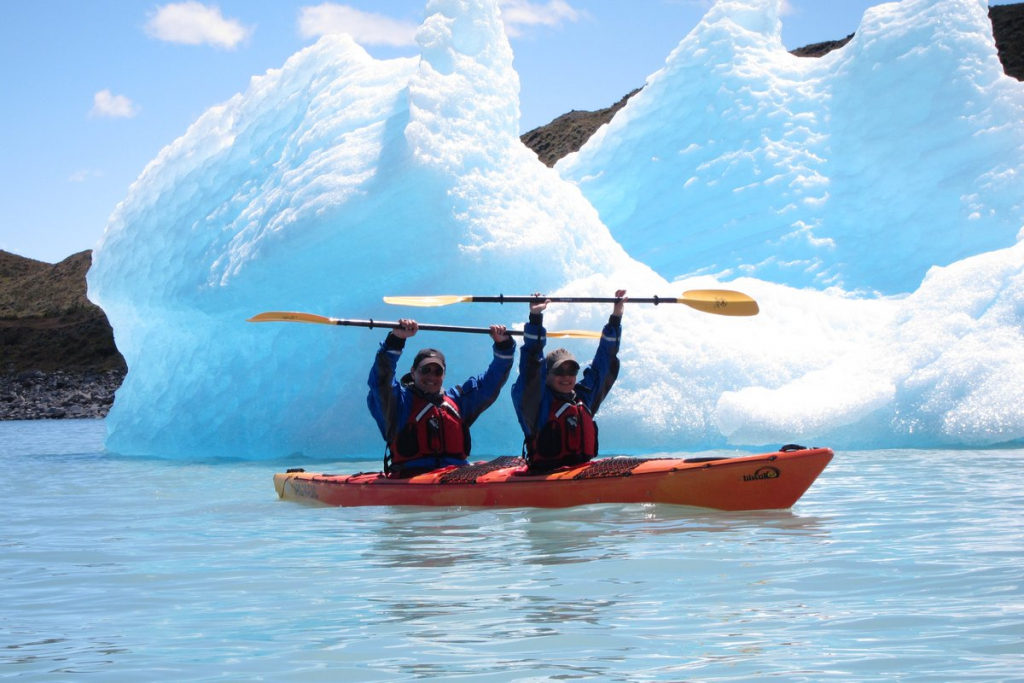
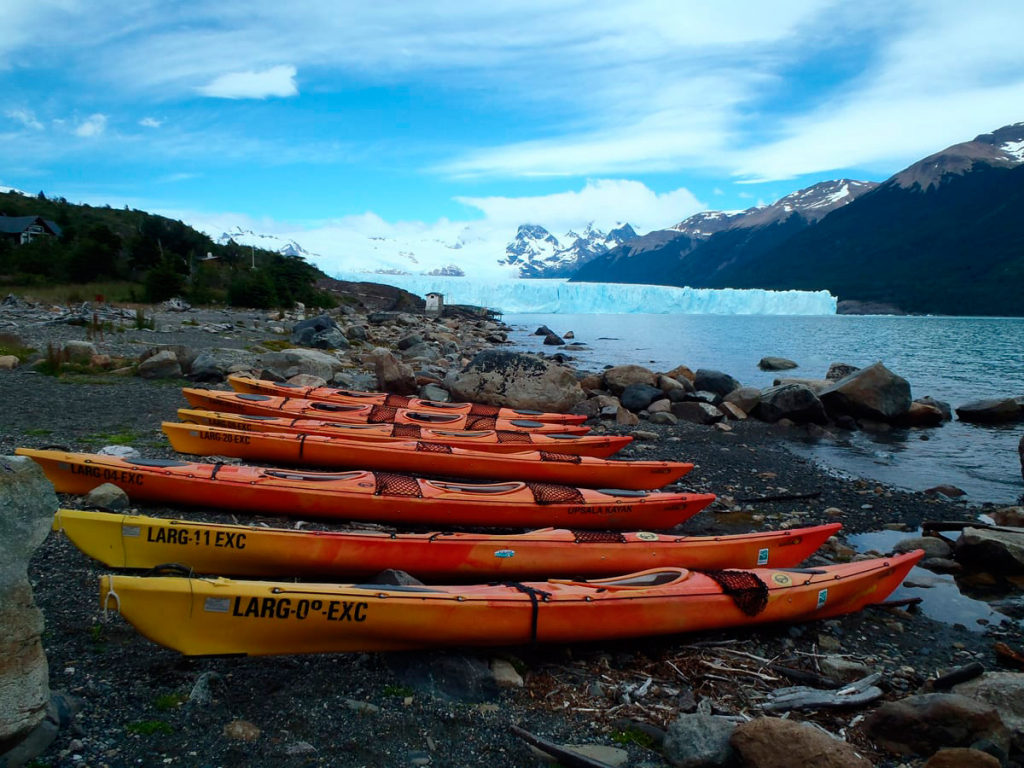
From the dome above the beach you are fitted with a Gore-Tex dry suit, thermal layers, boots, gloves and a life jacket, then given the paddling and safety briefing. The kayaks are doubles, so nobody is out there alone, and no previous experience is required — if you can sit up and pull, you can do this.
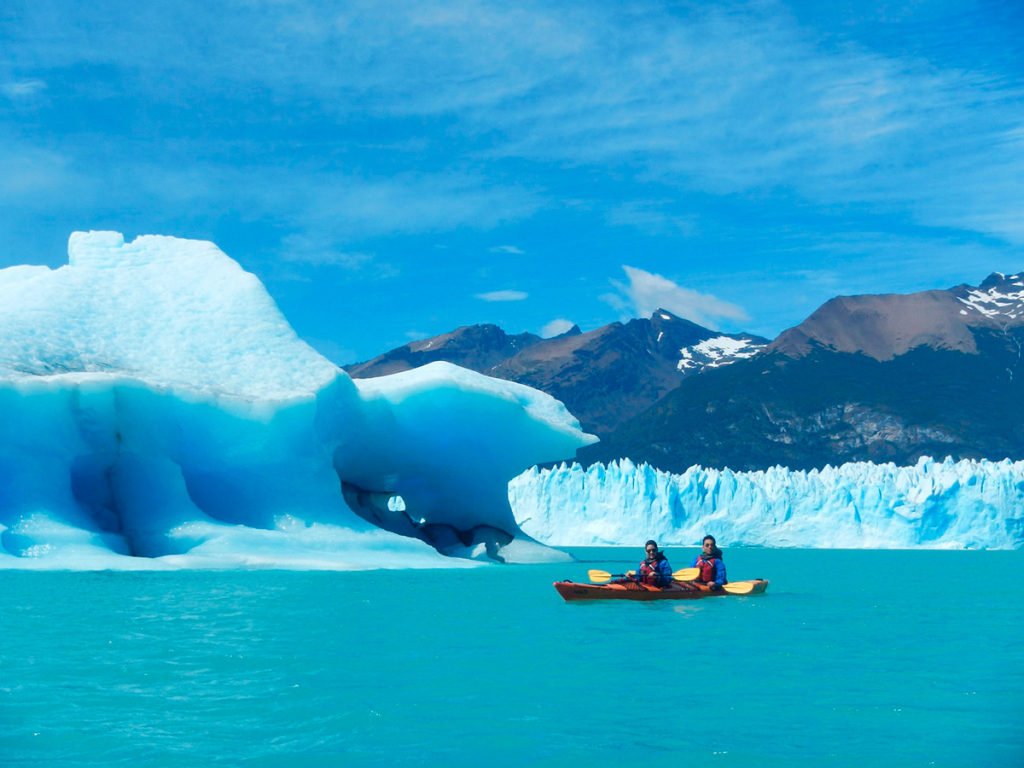
You launch from the Playa de los Témpanos and paddle out across the Canal de los Témpanos, the arm of Lago Argentino that the glacier's north face calves into. The guides bring you to within roughly 600 metres of the ice wall — and that distance is not timidity. When a tower the height of a twenty-storey building lets go, it displaces water, and the wave arrives long after the sound does. Six hundred metres is where the view is enormous and the physics are still on your side.
What you paddle among instead are the icebergs already adrift in the channel: blue, sculpted, silent, some of them close enough to touch.
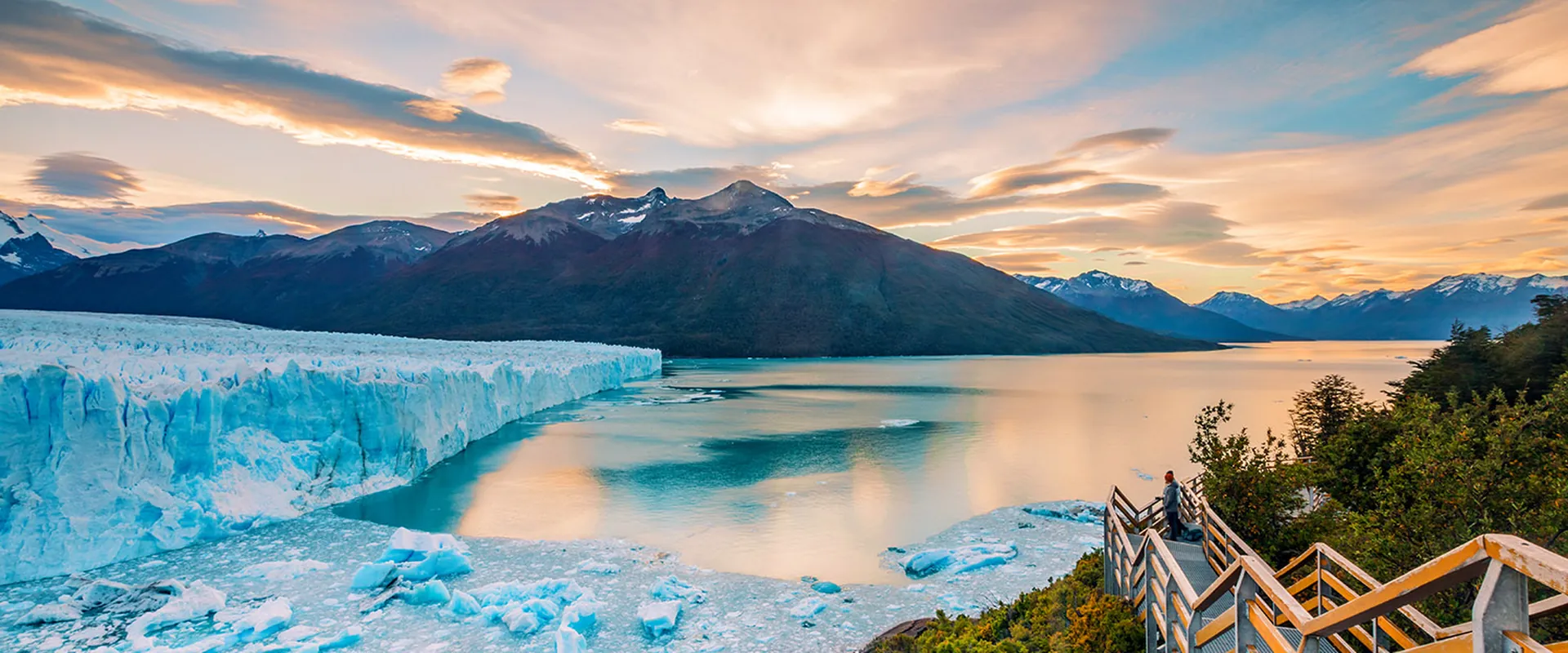
The kayak is only half the day. With transfers you also get about two hours on the boardwalks of the Península de Magallanes — several kilometres of steel walkway stepping down the hillside directly opposite the glacier, which is where you get the full five-kilometre width of the front in a single view.
This is where you wait for the sound. Calving here is not polite: it starts as a crack like a rifle shot bouncing off the mountains, then a tower of ice leans, hesitates and drops into the lake. Nobody can tell you when. Everyone stops talking when it happens.
We collect you from your hotel in El Calafate for the drive west into Los Glaciares National Park — about 80 km.
Around two hours on the walkways opposite the glacier, before the water. This is where the calving happens.
Down at the beach you are kitted out in the dry suit and thermals, and given the paddling and safety briefing.
Warm-up, then roughly 90 minutes paddling the Iceberg Channel to within about 600 m of the north face.
Out of the suits, hot drinks and a snack, then the drive back to El Calafate, arriving around 18:00.
Only 16 people go out per departure, so this one fills early — tell us your travel dates and we'll check availability and send a free, no-obligation quote within 24 hours.
One dedicated specialist plans your whole stay — not a booking platform with a call centre.
The boat cruises carry hundreds. This departure takes sixteen. That is the entire difference in how the glacier feels.
Double kayaks, a full briefing, warm-up exercises and guides alongside you the whole way. Most people who do this have never held a paddle.
A Gore-Tex dry suit over thermal layers, plus boots and gloves. Being properly kitted out is the difference between a memory and an ordeal.
Two hours opposite the ice wall, on the same ticket. You get both the postcard and the thing the postcard can't do.
One person builds your whole Argentina itinerary and answers your emails — not a platform with a call centre.
A registered agency with two decades organising trips across Argentina.
No. The kayaks are doubles, you get a full paddling and safety briefing plus warm-up exercises at the dome, and specialised guides stay alongside the group the whole way. Most people on this departure have never kayaked before. You do need to be reasonably fit and comfortable on the water.
To roughly 600 metres from the ice wall. That is a deliberate safety margin, not a limitation: when a section of a 74-metre wall calves, it displaces a serious amount of water, and the resulting wave travels. At 600 m the front fills your field of view and you are still well outside the danger zone. You will, however, paddle right up to icebergs already floating in the channel.
About 90 minutes of paddling. The full day, with transfers, runs roughly from 08:00 to 18:00 and includes around two hours at the boardwalks. Without transfers it runs from about 10:00 to 13:30.
No — photographic equipment cannot be taken on the water. We know that is frustrating. It is also, honestly, part of why people describe this as the best hour and a half of their trip: for ninety minutes there is nothing to do but look at it. Bring your camera for the boardwalks, where you will have two hours and a much better angle anyway.
Yes, 12 years. Anyone between 12 and 18 must be accompanied by a parent or legal guardian.
A maximum of 16 passengers per departure. It is a small-group activity by design, which is also why it books out well in advance in high season.
Everything technical: a Gore-Tex dry suit, a thermal suit underneath, neoprene boots, gloves and a life jacket, plus the kayak and paddle. You bring warm layers to wear under the thermal suit, and dry clothes for afterwards.
You are paddling on meltwater a few hundred metres from a glacier, so the lake is close to freezing — which is exactly why a dry suit is used rather than a wetsuit. Properly kitted out, most people are comfortable. The wind matters more than the air temperature: Patagonian wind is constant and it is what makes the paddling work.
It runs from roughly August through May, and does not operate in June and July. From November to February there are departures almost daily; in the shoulder months departures are on set days of the week. Tell us your dates and we will confirm exactly what is available.
No. The Los Glaciares National Park entrance fee is paid separately on arrival at the gate, as it is for every excursion into the park. We tell you the current amount when we quote so there are no surprises.
Yes, the departure is confirmed with a minimum of two passengers. If you are travelling solo, tell us — we will find you a departure that is already confirmed.
That is no longer accurate, and you should know it before you go. For decades Perito Moreno was famous as one of the very few large glaciers in the world roughly in balance. Research published in 2025 in Communications Earth & Environment found that the thinning rate at its front accelerated from about 0.34 metres per year between 2000 and 2019 to around 5.5 metres per year between 2019 and 2024, as the ice loses its grip on the underwater ridge that had been holding it in place. The last confirmed rupture of the famous ice bridge was in December 2019. It is still one of the great sights on earth. It is simply no longer the exception it used to be.
The Perito Moreno Glacier, El Chaltén, Ushuaia and the whole of Argentine Patagonia.
See all →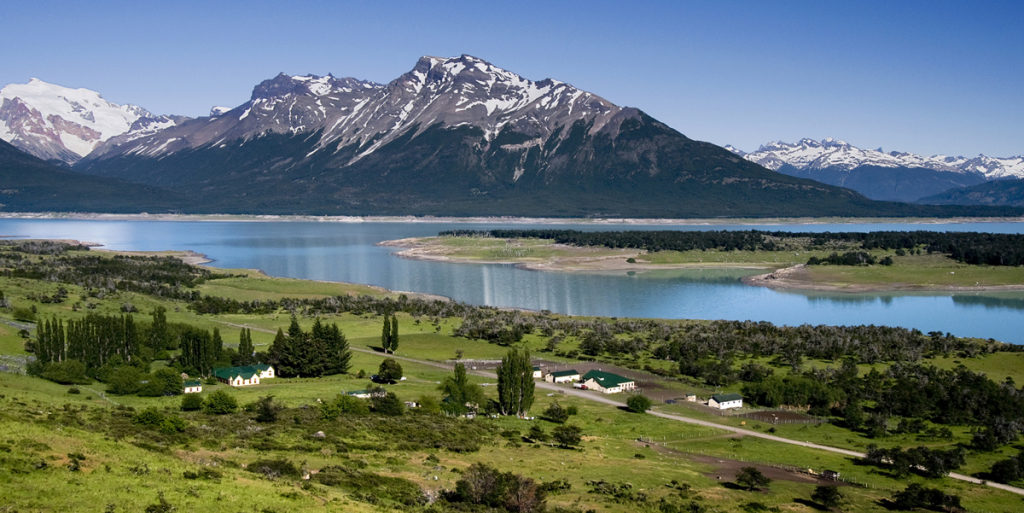
A full day at a working ranch inside Los Glaciares National Park, with a Patagonian lamb asado.
More information →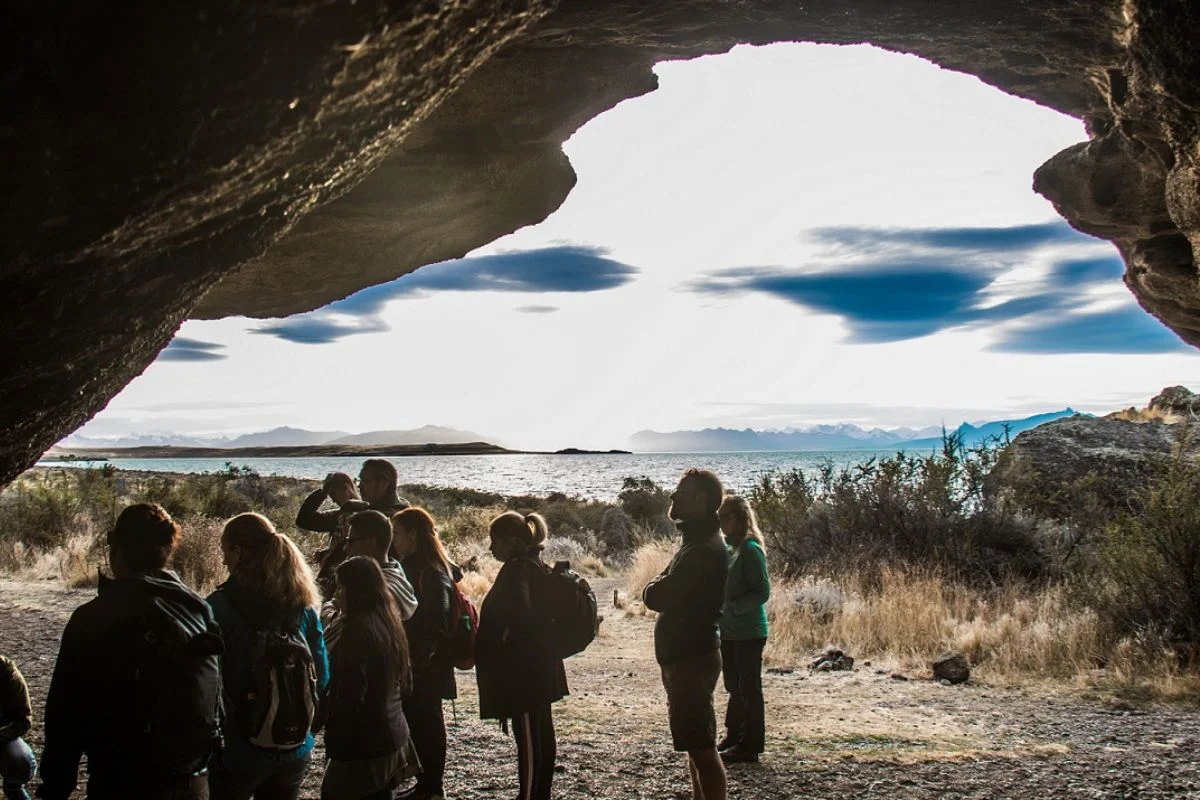
Rock art on the lake shore and the town's own story — the easy half day that explains the rest.
More information →The numbers are worth having in your head before you go. The glacier covers about 250 km², runs roughly 30 km back into the mountains, and meets Lago Argentino along a front about 5 km wide that stands around 74 metres above the lake — with roughly another hundred metres of ice below the waterline. It is one outlet of the Southern Patagonian Ice Field, and it sits inside Los Glaciares National Park, a UNESCO World Heritage Site since 1981.
None of that lands from a viewing platform. It lands about twenty minutes into the paddle, when you stop, the guides stop, everyone stops talking, and the only sounds left are water against the hull and, occasionally, something enormous cracking half a kilometre away.
The rest of the day is the conventional experience done properly: two hours on the boardwalks opposite the front, which is the best place on earth to watch a glacier calve, plus transfers from your hotel and a box lunch. Sixteen people per departure, so it goes early in high season. Send us your dates and we'll come back within 24 hours with a free quote and honest advice on where it fits in your week.