Three hours out of the centre of Ushuaia: a rock covered in sea lions, cormorant rookeries, the Les Éclaireurs lighthouse — and then the part that makes this one different. The boat puts you ashore. Fifteen or twenty minutes on an island of the Bridges archipelago, on ground the Yámana lived on. No other Beagle Channel cruise does that.
Sea lions, cormorants, the 1920 lighthouse, and twenty minutes standing on an island.
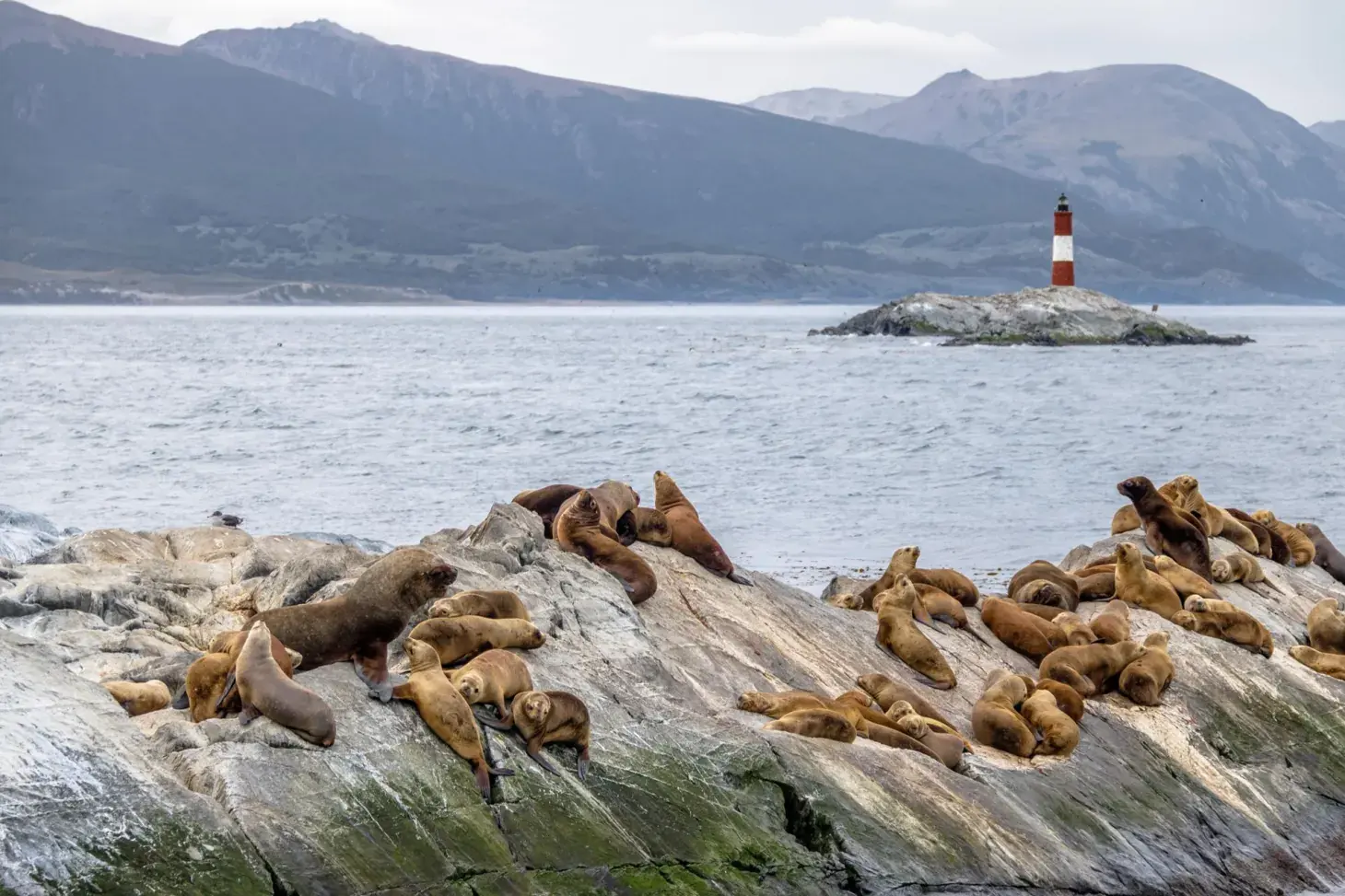
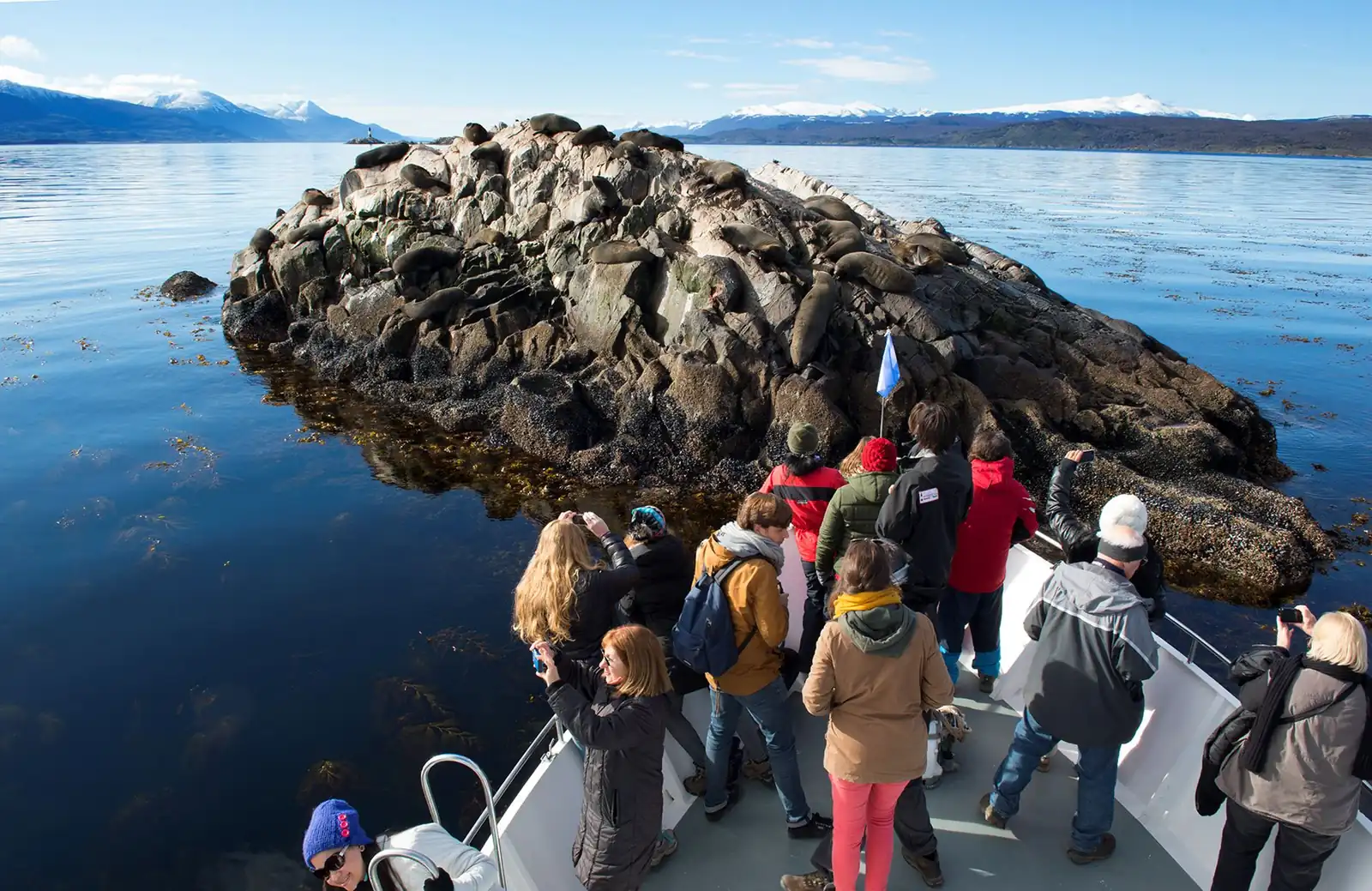
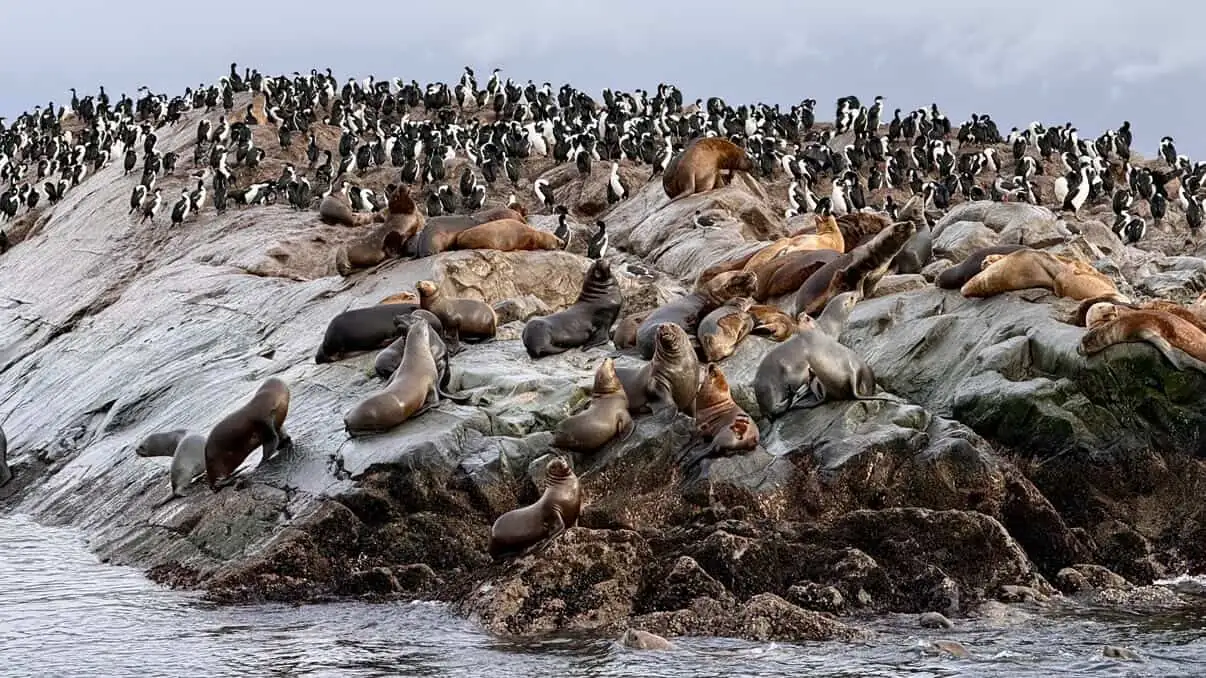
Twenty minutes out of the bay and the boat slows down beside a low rock with several hundred South American sea lions on it. You hear them before you see them, and you smell them before that. The bulls are enormous, territorial and permanently annoyed with each other; the females and pups pile up in the gaps between them.
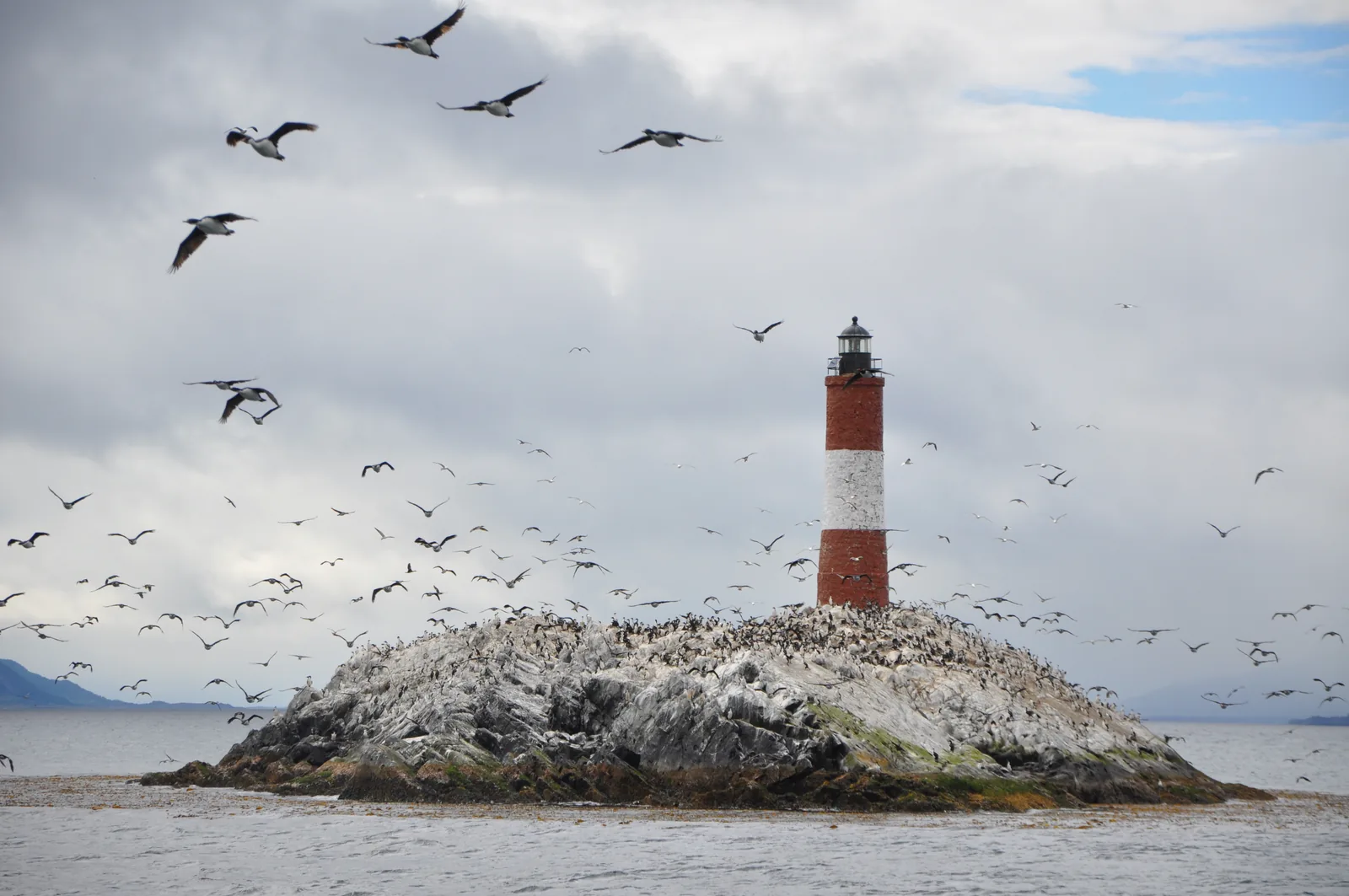
On the ledges above sit the birds: imperial cormorants, black and white and improbably tidy, and rock cormorants with red faces. Around the boat there are usually skuas, kelp geese, steamer ducks and, if the day is generous, a black-browed albatross tracking the wake.
The Beagle Channel is sheltered water, so this is not a rough crossing. The boat holds position long enough for everyone to get to both rails.
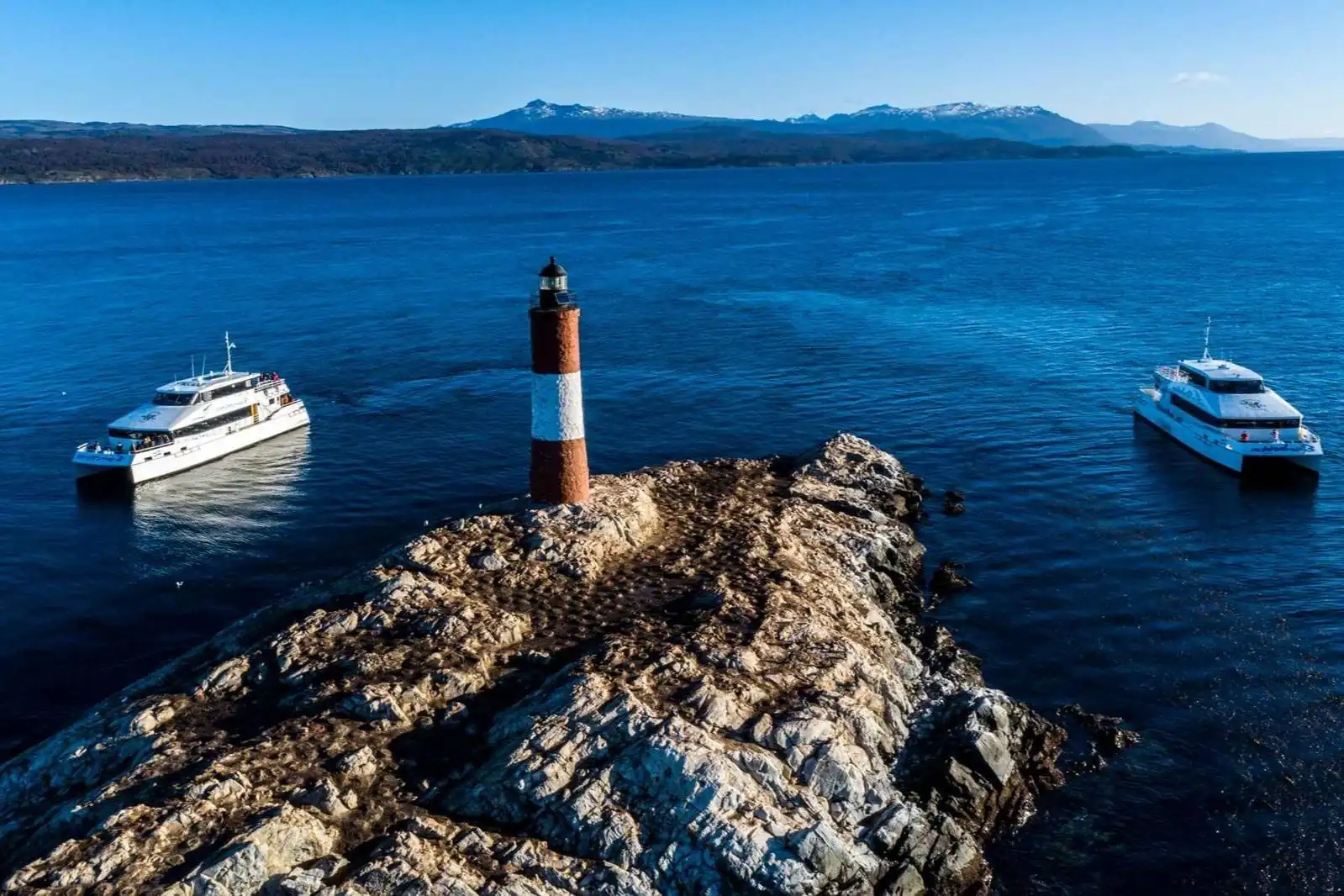
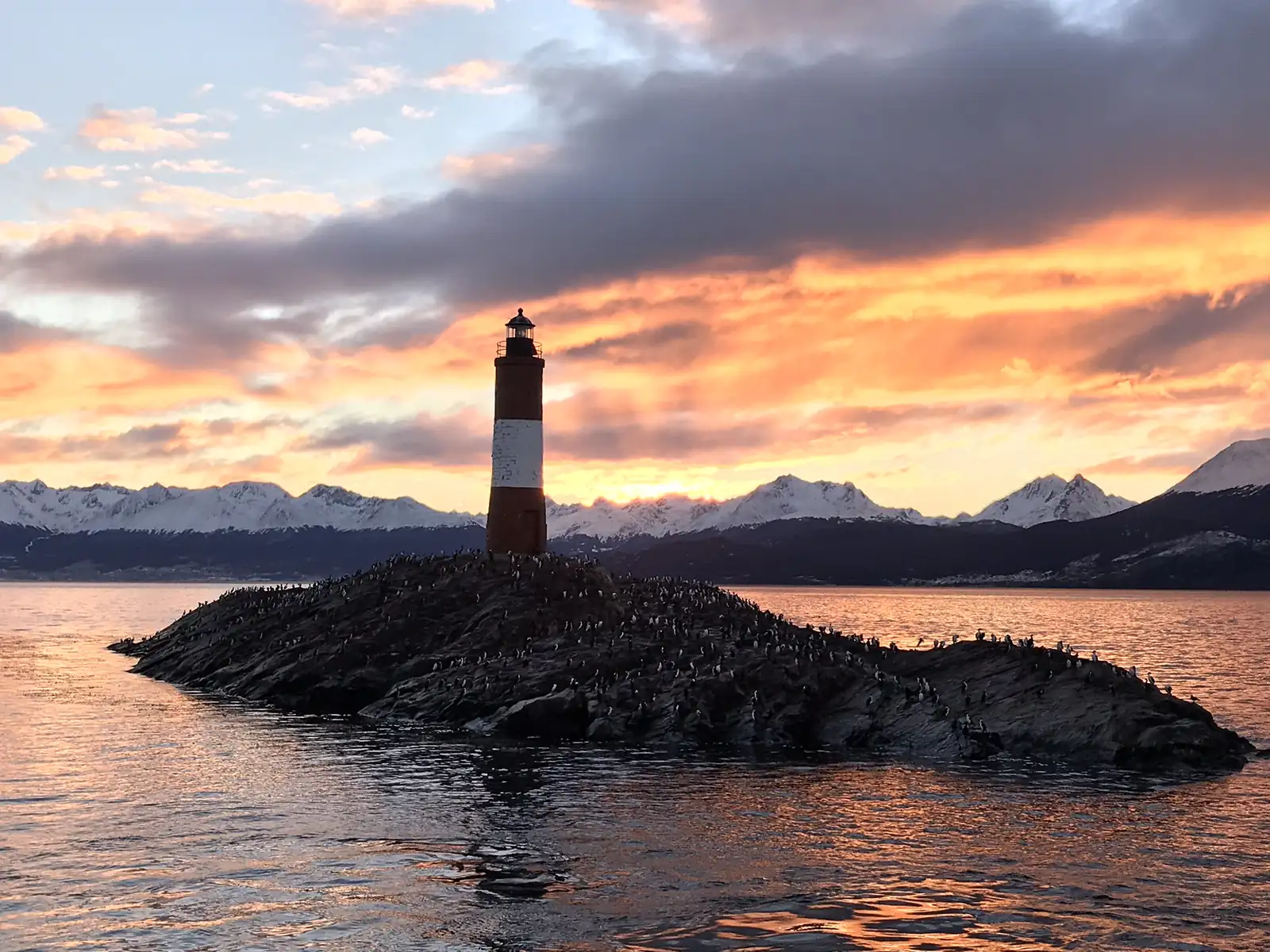
The red-and-white tower on its bare islet is the image of Ushuaia. It went into service in 1920, it is eleven metres high, it is automatic, and it still works. The boat circles the islet so both sides of the deck get the photograph.
Now the correction, because almost every tour page in English repeats it: this is not the “Lighthouse at the End of the World” from the Jules Verne novel. Verne’s lighthouse is San Juan de Salvamento, on Isla de los Estados, roughly two hundred kilometres east and not reachable on any day trip. The confusion has been repeated for so long that it now appears on menus.
What is true is better: Les Éclaireurs stands on the reef that sank the SS Monte Cervantes in 1930, an Italian-built liner carrying over a thousand passengers. Everyone aboard got off. The captain did not. The wreck is still down there.
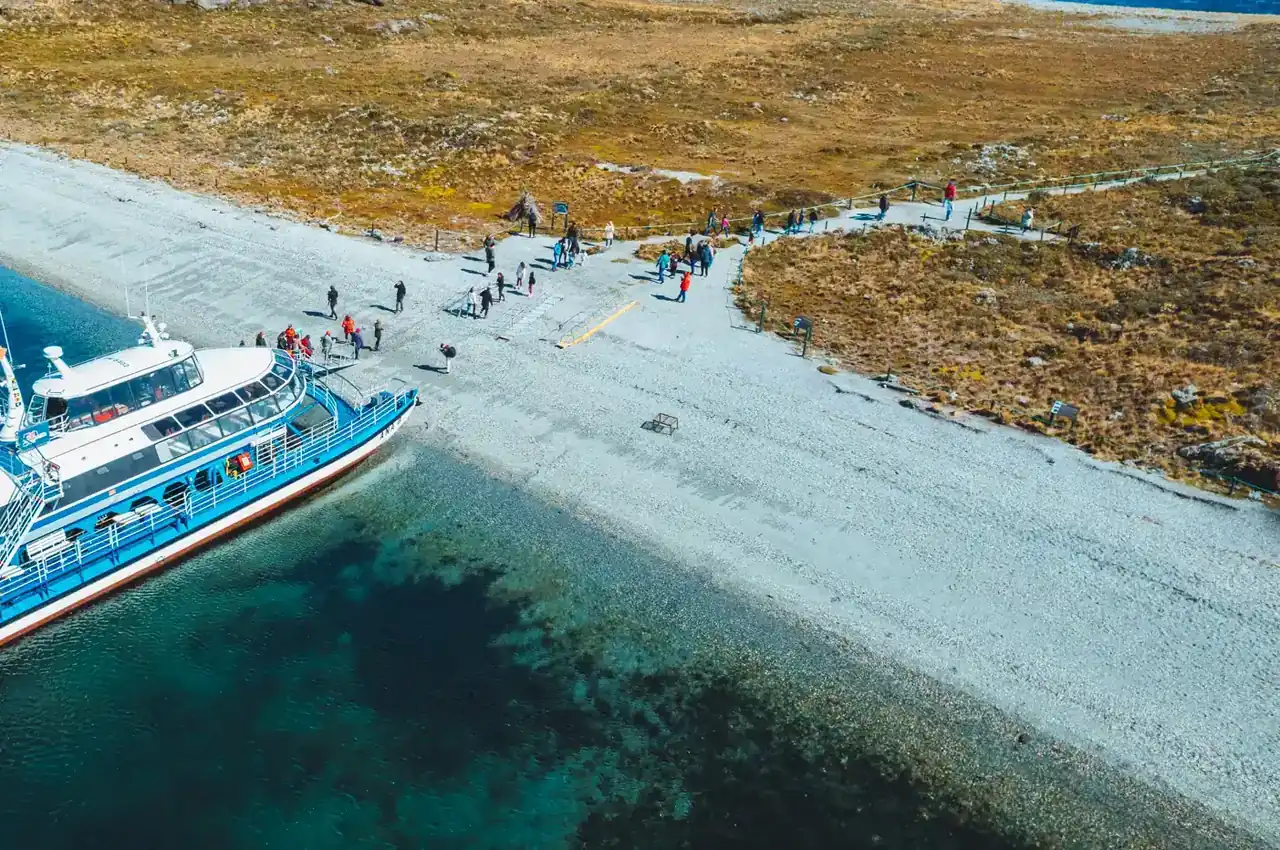
This is the reason to choose this navigation over the others, and it is oddly under-advertised. After the lighthouse the catamaran runs up onto the gravel of an island in the Bridges archipelago and you walk off. Fifteen to twenty minutes ashore, on your own feet.
What is there: the low subantarctic flora of the channel — cushion plants, mata negra, lichen on rock that has been bare since the ice left — and archaeological remains of the Yámana, the canoe people who lived on these shores for six thousand years and were almost entirely gone within fifty years of European contact. From the top of the island you get what is probably the best panorama of the trip: Ushuaia laid out against the Martial range, with Chile across the water.
One thread worth knowing before you stand there. The Bridges archipelago carries the name of Thomas Bridges, the missionary who compiled the first Yáman dictionary and founded Estancia Harberton in 1886. His descendants still own Harberton — and Isla Martillo, the penguin island further east. The two excursions are joined by one surname.
40 minutes before departure
You present yourself at the ticket offices at the Port of Ushuaia, in the middle of town, forty minutes before sailing, and pass the port controls. Transfers from your hotel are not included — the pier is walkable from most of the centre.
First 20 minutes
Past the working port and the moored ships, with the town rising behind you against Monte Olivia and the Cinco Hermanos. It is the view of Ushuaia you cannot get from Ushuaia.
Sea lion colony
The boat closes on the rock and holds. Several hundred South American sea lions, and the noise and smell that come with them.
Cormorants and seabirds
Imperial and rock cormorant rookeries packed onto the ledges, with skuas and kelp geese working the water around them.
The postcard
The 1920 tower on its islet, circled so both rails get the shot. The reef below it is where the SS Monte Cervantes went down in 1930.
15 to 20 minutes ashore
The catamaran runs onto the gravel and you walk off. Channel flora, Yámana archaeological remains, and the panoramic view back over the city and the Andes.
About 3 hours after departure
Return to the tourist pier where you started, in the centre of Ushuaia, with most of your day still ahead of you if you took the morning departure.
Read the right-hand column. The second line is the one people get wrong.
No. We are putting this first because it is the single most common mistake travellers make in Ushuaia, and because this is the excursion most often included in package holidays.
The penguin colony is on Isla Martillo, about forty kilometres further east. Reaching it and coming back takes six hours, not three. This navigation turns around at the lighthouse and the Bridges archipelago.
If penguins are the reason you are going out on the water, you want the six-hour navigation to the penguin colony instead. Tell us and we will quote that one.
Yes, and it is the reason to pick this one. The catamaran runs up onto the gravel of an island in the Bridges archipelago and you walk ashore for fifteen to twenty minutes.
You see the low flora of the channel, archaeological remains left by the Yámana, and a panoramic view back over Ushuaia and the Martial range that you cannot get from anywhere else. It is flat ground and an easy walk.
The Yámana (also written Yaghan) were the canoe people of the Beagle Channel. They lived along these shores for something in the order of six thousand years, moving by bark canoe, keeping fires burning aboard — which is where the name Tierra del Fuego comes from.
What survives on the ground are the traces of that: shell middens and the circular depressions where shelters stood. They are not spectacular to look at and that is rather the point — they are the ordinary remains of ordinary life, on an island where nobody has lived for a century.
No. They share the first part — sea lions, cormorants, the lighthouse — and then they diverge.
This one (3 hours) lands you on Bridges Island and comes home. The other one (6 hours) keeps going east to the penguin colony on Isla Martillo, and does not land anywhere.
Put plainly: this is the one where you get off the boat; that is the one where you see penguins. You cannot do both on the same sailing. If you have the time, plenty of travellers do the short one on arrival day and the long one later in the week.
The 10:00 if you want the rest of the day — you are back at the pier by around one and the afternoon is free, which is exactly enough for the National Park or the Martial chairlift.
The 15:00 if you want the light. In summer the sun is still high at seven in the evening and the channel goes gold on the way back. Photographers should take the afternoon.
Yes. Unlike the penguin navigation, which only operates in the southern summer, the short Beagle Channel trip runs outside the season too. We confirm the exact departures for your dates on your quotation.
Winter on the channel is a real thing to see: snow down to the waterline, the mountains white on both sides, and a fraction of the people. Dress for it and it is arguably the better version.
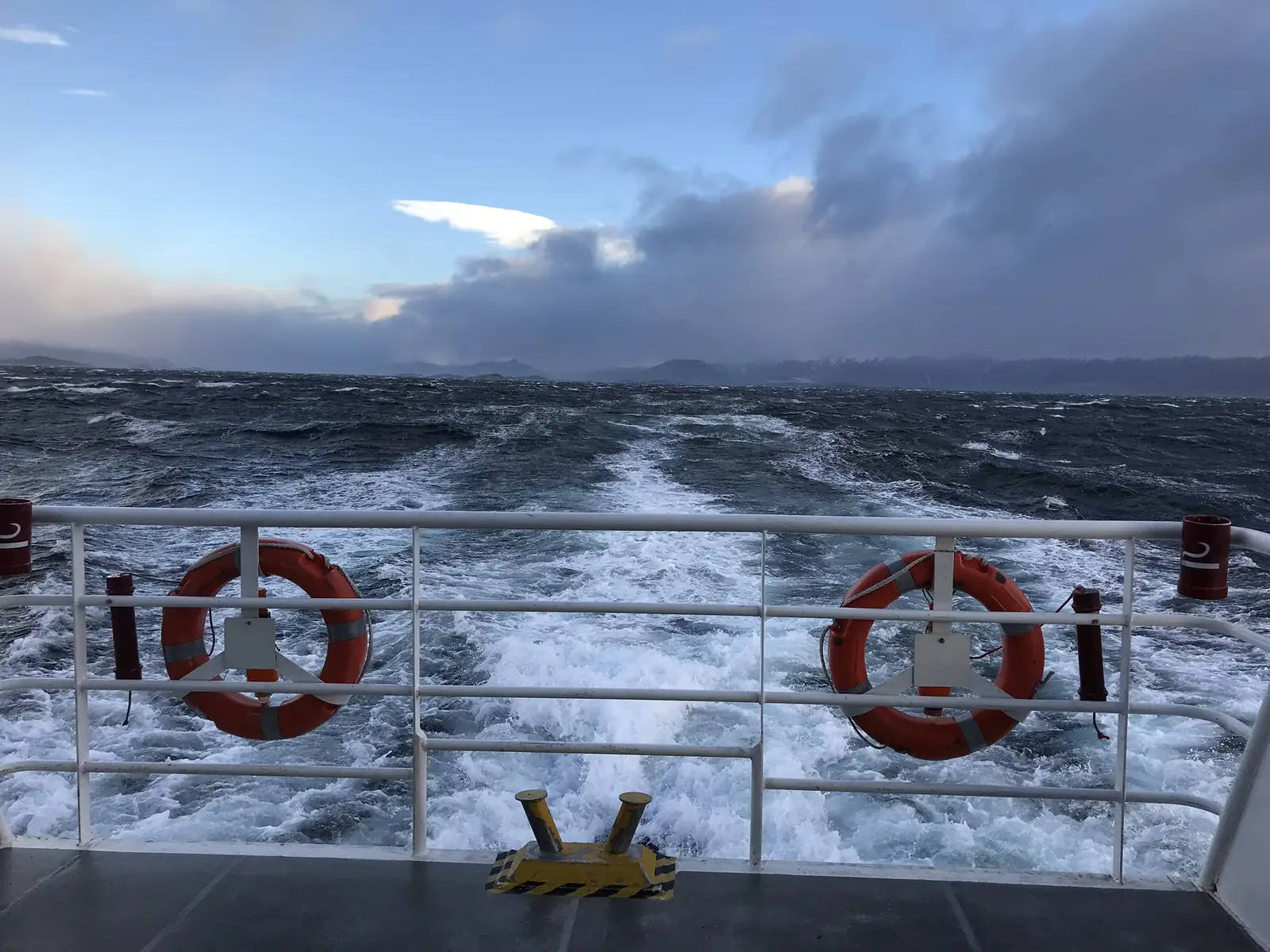
Sailings can be suspended. The Beagle Channel is sheltered compared with open ocean, but Ushuaia gets serious wind and the port authority stops departures when it judges it necessary.
If yours is suspended you are rescheduled or refunded. Practical advice: do not book this for the last few hours before your flight. Leave a spare half-day in Ushuaia and the problem disappears.
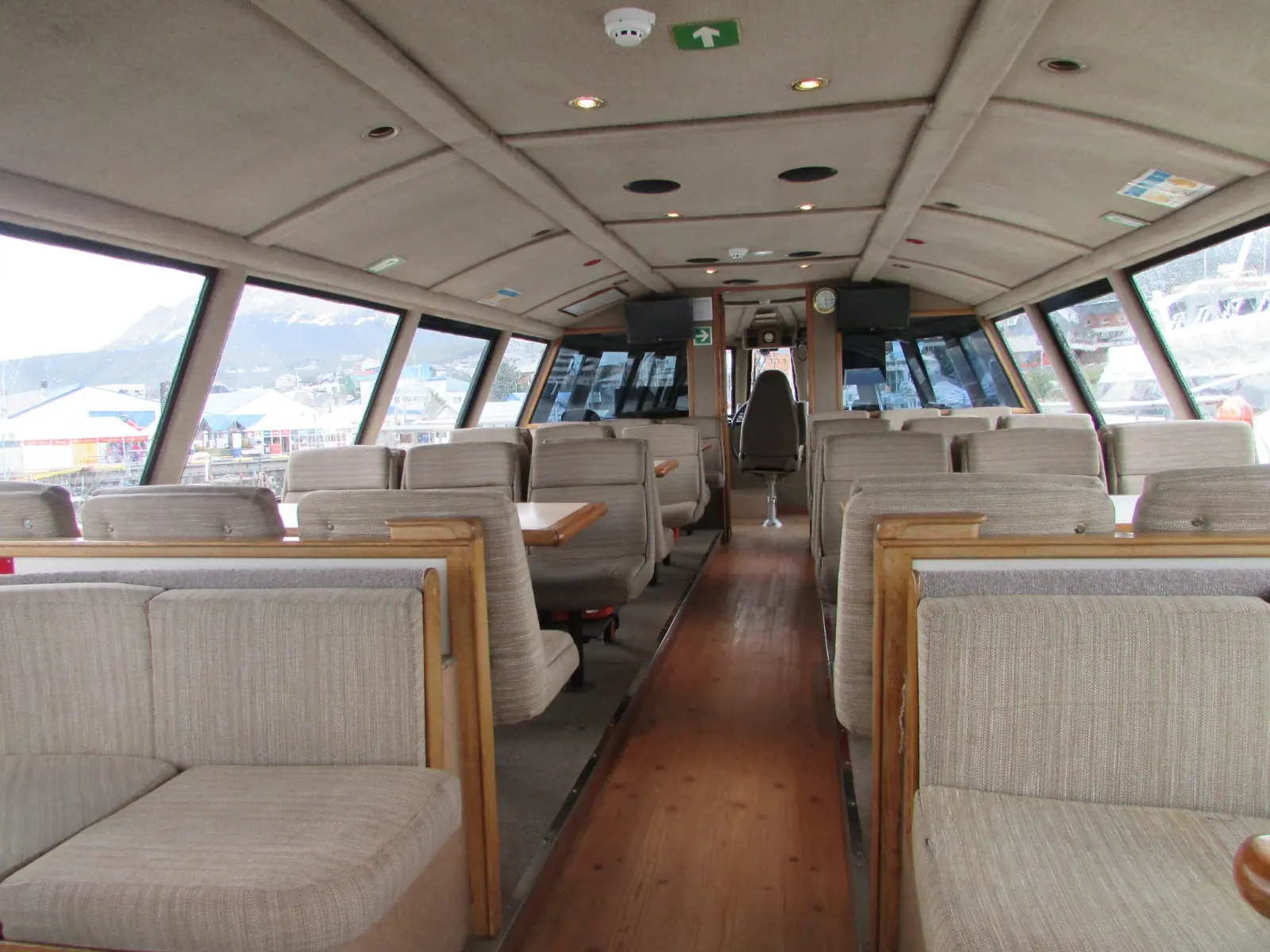
Yes, and three hours is the right length for both. There is a heated saloon with seating and large windows, a bar and toilets, and an open deck for when you want the wind.
The landing is a short walk on flat gravel. Anyone who would rather not get off can stay aboard. If someone in your group has limited mobility, tell us when you enquire and we will confirm the boarding arrangements rather than guess.
A windproof jacket, whatever the forecast says, plus a hat and gloves even in January. It is always colder on the water than in town, and the good viewing is on the open deck.
Also sunglasses and sunscreen — the light off the channel is fierce — closed shoes with grip for the gravel, and a spare camera battery, because the cold empties them faster than you expect.
Ushuaia sits on a channel, and until you are out on it the town does not entirely make sense. Three hours is enough to fix that: you see where the mountains actually come down to the water, how narrow the strip of flat land the city is built on really is, and how close Chile is — close enough to read the shape of the hills.
The wildlife is the easy part of the sell. What people tend to remember is the twenty minutes on Bridges Island: standing on a bare gravel island in the middle of the Beagle Channel, on ground where the Yámana camped for thousands of years, looking back at a town that is barely a century old. Very few excursions anywhere let you simply get off and stand somewhere like that.
It runs twice a day and it is short, so it fits on an arrival day, a departure morning, or the front half of a day that ends in the National Park. Send us your dates and how many of you there are and we will tell you which sailing fits, and whether you should also be doing the long one.
Free quotation within 24 hours, with no obligation. Tell us your dates and how many of you are travelling and we will confirm availability, which departure suits the rest of your days in Ushuaia, and exactly what is and is not included.
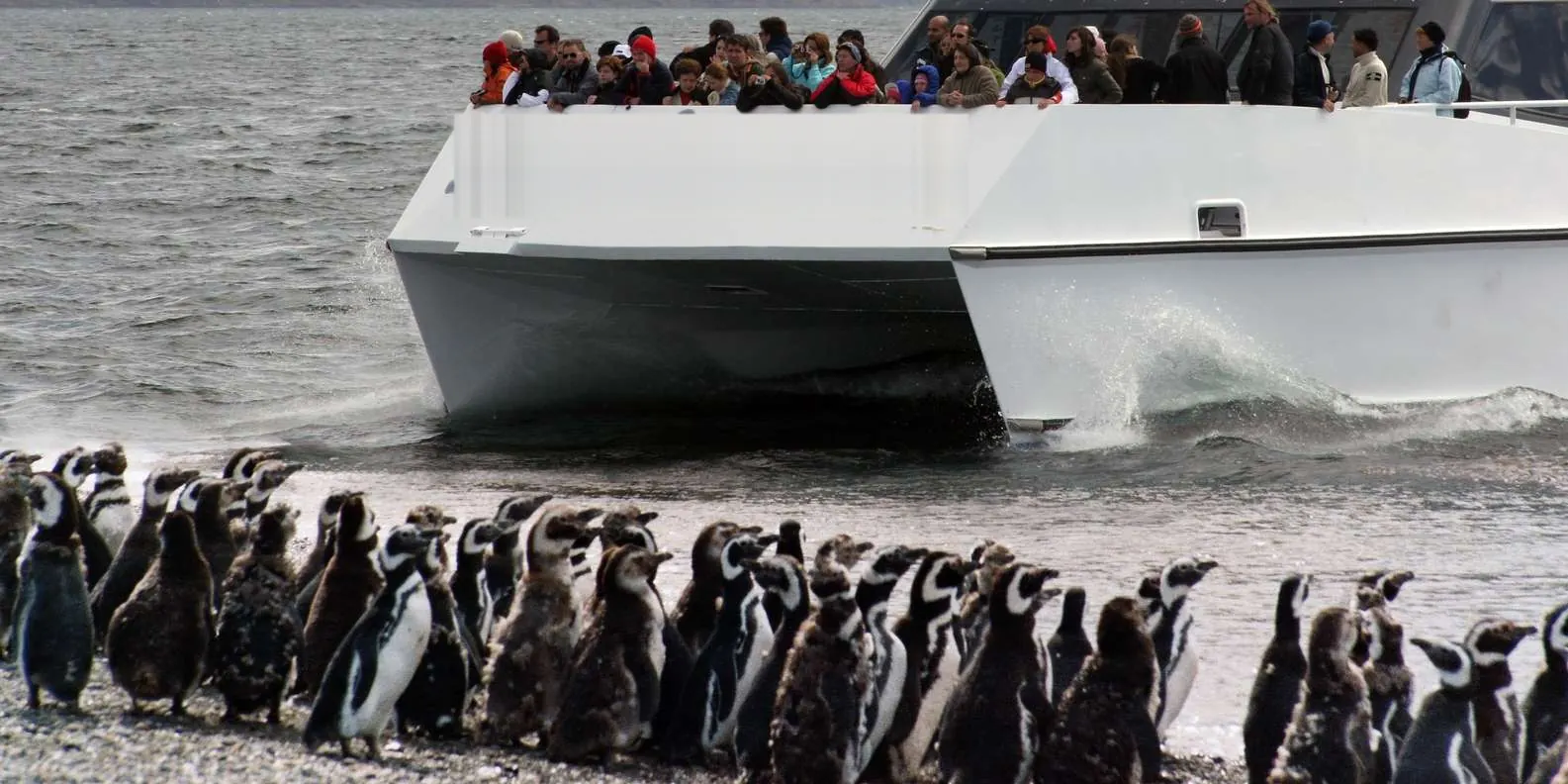
The one that reaches Isla Martillo and its ten thousand Magellanic penguins. No landing on that one — we explain why.
More information →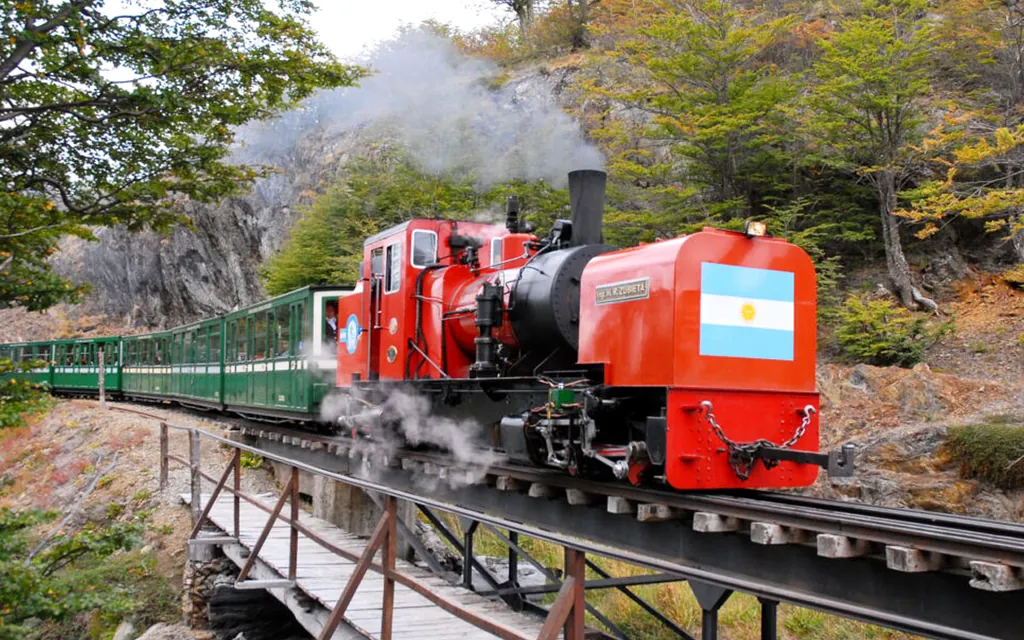
The half day that pairs with a 10:00 sailing: the prison railway of 1909 and the end of Route 3.
More information →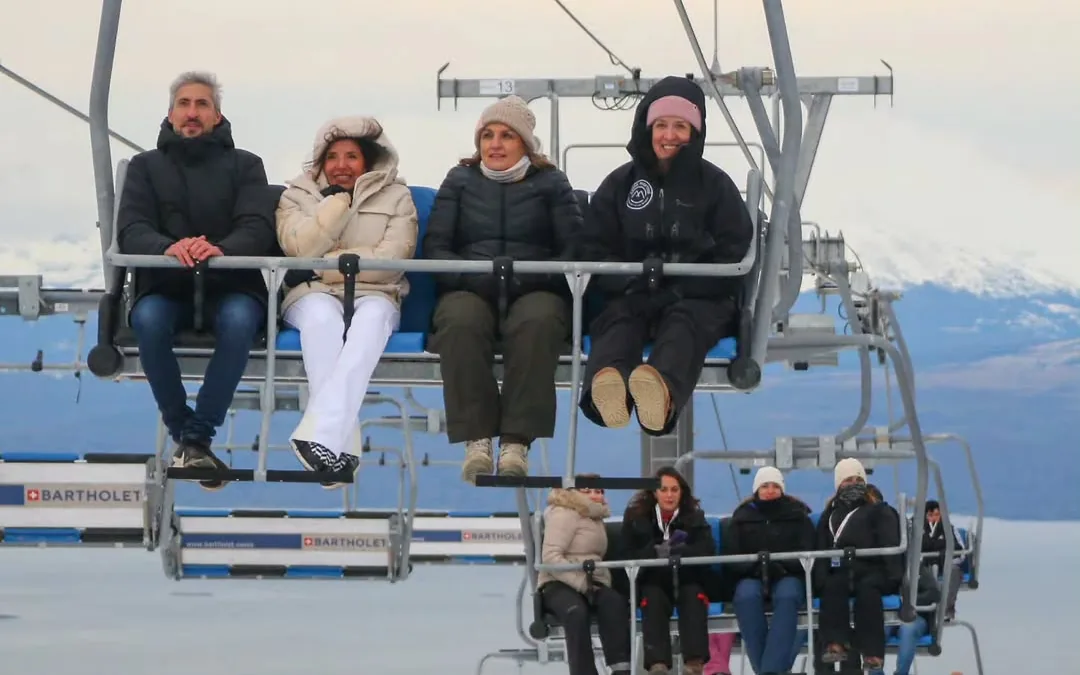
Everything we run at the end of the world, from half-day outings to full packages with flights.
See all Ushuaia tours →