
A Feast for the Senses: Exploring the Traditional Foods of Argentina
Your Complete Culinary Guide, Curated by 01 Argentina Travel Agency
Argentina is a country that wears its soul on its plate. Long before the world discovered its world-class wines and breathtaking Patagonian landscapes, travelers were drawn south by something far more primal: the intoxicating aroma of meat sizzling over open flames, the warmth of a bowl of locro on a cold Andean morning, and the golden, flaky crunch of a freshly baked empanada. Argentine cuisine is a rich tapestry woven from indigenous heritage, waves of European immigration, and the enduring culture of the Gaucho — and it remains one of the most underrated food destinations on the planet.
At 01 Argentina Travel Agency, we have spent years guiding thousands of international visitors through the culinary landscapes of Buenos Aires, Mendoza, Salta, Patagonia, and every corner in between. Whether you are planning your first trip or returning for more, understanding Argentina’s food culture will transform the way you experience this extraordinary country. This guide is your passport to the flavors that define a nation.
Asado: More Than a Barbecue — It’s a Way of Life
If there is one dish that defines Argentina to the world, it is the asado. To call it simply a “barbecue,” however, would be a disservice to one of the most elaborate and emotionally charged food traditions in the Southern Hemisphere. An asado is an event, a gathering, and a philosophy. It is the Argentine Sunday ritual that pulls families and friends together around a parrilla (grill) for hours of slow-cooked, wood-fired perfection.
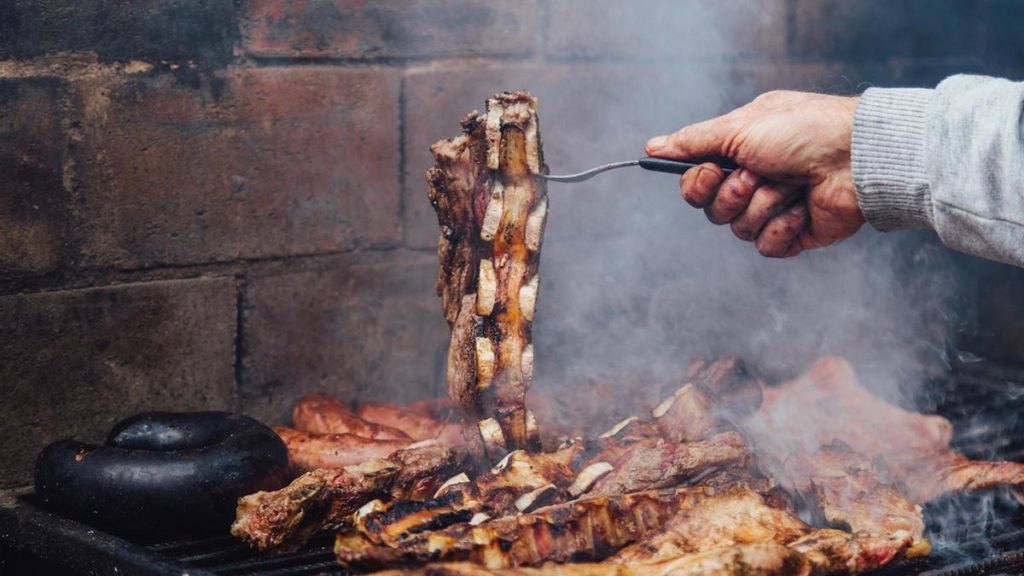
The asado is presided over by the asador — the grill master — who tends the fire with near-religious devotion. The true secret lies in two things: the exceptional quality of Argentine beef and the patience to cook it slowly. Cattle raised on the lush Pampas grasslands produce some of the most flavorful, well-marbled beef in the world. Key cuts include the tira de asado (short ribs), vacío (flank steak), and the highly prized entraña (skirt steak).
Beyond beef, a traditional asado also features achuras — a selection of offal that includes mollejas (sweetbreads), chinchulines (small intestines), and riñones (kidneys). These are not for every palate, but seasoned locals consider them among the finest parts of the entire spread. The meal is finished with chimichurri — a bright, herby sauce of parsley, garlic, olive oil, oregano, and red wine vinegar — and salsa criolla, a fresh relish of diced tomatoes, onion, and peppers.
When clients travel with 01 Argentina Travel Agency, we go out of our way to arrange genuine asado experiences — not the polished tourist versions, but the real thing: a family parrilla in the Pampas, a winery asado in Mendoza at harvest time, or a long, unhurried lunch at a working estancia in the countryside.
Empanadas: Argentina’s Beloved Pocket of Flavor
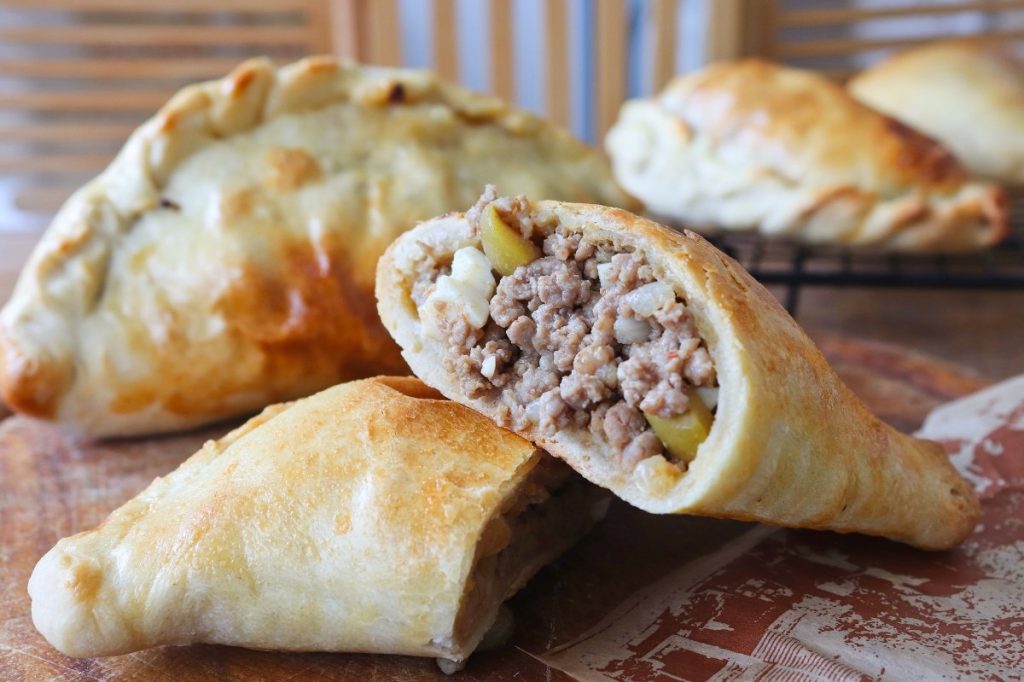
Few foods are as deeply embedded in Argentine daily life as the empanada. These crescent-shaped stuffed pastries appear in every corner of the country — on street food stalls, in family kitchens, at local bakeries, and on the menus of upscale restaurants. What makes Argentine empanadas particularly fascinating is the extraordinary regional diversity: each province has its own recipe, its own story, and its own way of folding and crimping the dough — a practice known as repulgue, which often signals the filling inside.
Salta Empanadas are widely regarded by Argentines themselves as among the finest in the country. Small, juicy, and intensely flavored, they are filled with ground beef, diced potato, hard-boiled egg, spring onion, and an aromatic blend of cumin and paprika. Baked until deeply golden, they are best eaten hot enough to require a moment of patience.
Tucumán Empanadas hold a special status — the province even hosts an annual national empanada festival. These use shredded beef rather than ground meat, and the filling often includes a touch of sweetness from raisins, a legacy of the region’s colonial history.
Buenos Aires Empanadas reflect the city’s cosmopolitan, immigrant-shaped identity. They are generally larger and come in a broader range of fillings: ham and cheese (jamón y queso), spinach and ricotta (espinaca y ricotta), and caprese are all common alongside the classic beef versions.
Mendoza Empanadas tend to be heartier and more robustly spiced, often incorporating locally grown produce and served alongside a glass of regional Malbec.
One of the great joys of traveling through Argentina is discovering your own regional favorite. At 01 Argentina Travel Agency, we regularly design culinary itineraries that take visitors from province to province, sampling empanadas as a window into local identity and tradition.
Locro: The Soul-Warming Stew of the Andes
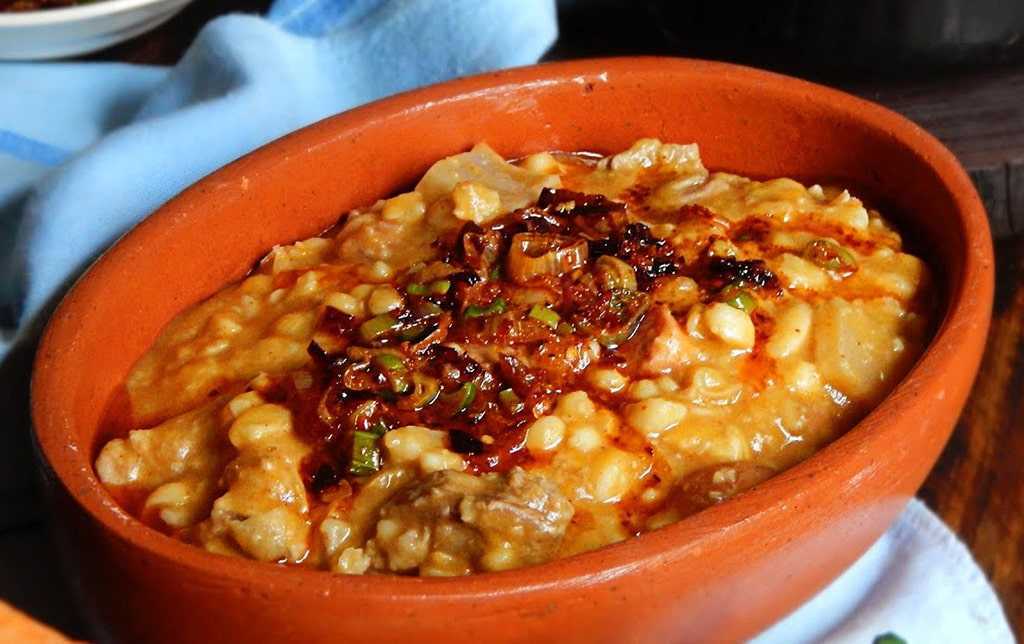
When winter descends over the Andean provinces and the central Pampas, Argentines turn to locro — a thick, deeply nourishing stew with pre-Columbian roots stretching back thousands of years. This is food born of the land and of necessity, originally prepared by the indigenous peoples of the Andes long before Spanish colonization. Over centuries, it absorbed new ingredients and became one of Argentina’s most treasured national dishes.
Traditional locro is a slow-cooked combination of white corn (maíz blanco), white beans, squash, and assorted cuts of pork — including ribs, skin, and sausages — all simmered together for several hours until they meld into a single, smoky, gloriously hearty pot. It is served with a spoonful of grasita colorada on the side: a dripping of rendered pork fat, paprika, and onion that adds a final burst of color and depth.
Locro is the customary dish of patriotic celebrations, served across the entire country on May 25th (National Day). It is deeply associated with winter, national pride, and the warmth of communal gathering. Travelers visiting Argentina between May and September should make it a priority — particularly in Salta, Jujuy, and the Andean foothills, where the recipe remains closest to its original form.
Chorizos and the Art of the Argentine Sausage
The Argentine chorizo bears little resemblance to its Spanish or Mexican counterparts. Here, it refers to a fresh pork sausage — coarsely ground and lightly seasoned with oregano, paprika, and garlic — grilled over open coals until the casing blisters and the interior becomes succulent and juicy. It is neither dried nor heavily smoked, and it carries only gentle heat. What it lacks in complexity it more than compensates for in pure, honest flavor.
The choripán — a grilled chorizo served in a crusty bread roll and dressed with chimichurri — is arguably Argentina’s most democratic and beloved street food. It is the food of football stadiums, weekend markets, and roadside parrillas. Joining the line for a choripán at a Buenos Aires street fair, smoke drifting overhead and the smell of grilling meat in the air, is one of those visceral, irreplaceable travel experiences.
Beyond the standard chorizo, the parrilla also features morcilla — a blood sausage made with pork fat, rice, onion, and warm spices — which is an essential part of any traditional asado. Rich, earthy, and intensely flavored, morcilla is one of those foods that inspires deep devotion among those who appreciate it.
Other Essential Dishes You Must Try
Milanesa — a thin, breaded and fried cutlet of beef or chicken — is perhaps the most universally consumed dish in Argentina after the asado. A direct legacy of Italian immigration, it occupies a place of profound affection in the national diet. The milanesa napolitana, topped with tomato sauce, ham, and melted cheese, takes this everyday comfort food to something genuinely celebratory.
Provoleta is the indispensable asado appetizer: a thick disc of provolone cheese placed directly on the grill until it melts into a golden, bubbling mass with lightly charred edges. Drizzled with olive oil and scattered with dried oregano and crushed red pepper, it disappears within minutes of hitting the table.
Pasta occupies an unexpectedly important place in Argentine cuisine, again thanks to the waves of Italian immigrants who arrived in the late 19th and early 20th centuries. On the 29th of each month, Argentines observe a charming tradition of eating ñoquis (gnocchi) and placing a banknote under the plate for good luck.
Dulce de leche is the sweet thread that runs through virtually all of Argentine dessert culture. This thick, amber caramel — made by slowly reducing sweetened milk — is spread on toast, sandwiched between cookies in alfajores, swirled through ice cream, and folded into pastries. It is Argentina in a spoonful, and most visitors confess to bringing several jars home.
Mate, while a beverage rather than a food, is inseparable from Argentine culinary culture. This bitter herbal infusion, drunk from a shared gourd through a metal straw, is a daily ritual of friendship and hospitality. To be offered mate is to be welcomed into someone’s inner circle — and accepting it with grace is one of the most respectful gestures any visitor can make.
Q&A: Your Questions About Argentine Food Answered
Q: What is the best time of year to try locro?
Locro is a winter dish, best enjoyed between May and August. It is most commonly served during the May 25th national holiday celebrations, when it appears on tables across the entire country. The most traditional versions are found in the northwestern provinces of Salta and Jujuy.
Q: Which province makes the best empanadas?
Every Argentine will answer this differently — and with great passion. The most celebrated empanadas tend to come from Salta and Tucumán, where the tradition runs deepest. That said, each region offers something distinct, and part of the joy of traveling through Argentina is forming your own opinion.
Q: Is Argentina a good destination for vegetarians?
Traditionally meat-heavy, Argentine cuisine has evolved considerably. Buenos Aires in particular has a thriving vegetarian and vegan scene. Many empanada fillings are meat-free, and pasta, pizza, and vegetable-based dishes are widely available. Travelers with dietary restrictions will find Argentina far more accommodating than its reputation suggests.
Q: What wine pairs best with an asado?
A Malbec from Mendoza is the classic and correct answer. The wine’s dark fruit, silky tannins, and subtle smokiness find a natural counterpart in the rich, fatty flavors of grilled beef. For those who prefer something lighter, Torrontés — an aromatic white wine unique to Argentina — pairs beautifully with empanadas and lighter starters.
Q: How can I experience an authentic asado as a visitor?
The best asado experiences are rarely found in Buenos Aires’ tourist zones. At 01 Argentina Travel Agency, we specialize in connecting travelers with estancia owners, local families, and rural producers who host intimate, unhurried gatherings. These afternoons around a fire, with Argentine hosts who cook with genuine pride, are consistently the most memorable moments of our clients’ trips.
Travel Argentina’s Table with 01 Argentina Travel Agency
Food is never just food. It is memory, identity, generosity, and history. In Argentina, it is also one of the most direct paths into the heart of the culture. The asador tending his fire, the grandmother rolling empanada dough by hand, the street vendor sliding a choripán onto a paper plate — these are the human moments that travel makes possible, and that stay with you long after you return home.
At 01 Argentina Travel Agency, food is woven into everything we create. Our culinary itineraries are built around authentic access — not glossy tourist restaurants, but real tables, real recipes, and real people. Over the years, thousands of travelers from across the world have trusted us to guide them through Argentina’s most memorable dining experiences: wine harvest lunches in Mendoza, street food crawls through Buenos Aires’ most characterful neighborhoods, estancia asados on the open Pampas, and indigenous food traditions in the Andean northwest.
Our local guides have firsthand knowledge of the finest parrillas, the most talented home cooks, the markets worth waking up early for, and the wineries that pour their rarest bottles for those who know to ask. When you travel with 01 Argentina Travel Agency, you are not reading about Argentine food — you are living it.
Whether you are planning a sweeping two-week journey across the country or a focused culinary weekend in Buenos Aires, we have the expertise, the relationships, and the genuine passion to make it extraordinary. Argentina is one of the world’s truly great food destinations. There has never been a better time to taste it for yourself.
Ready to plan your Argentine culinary adventure? Contact 01 Argentina Travel Agency today and let us design the journey of a lifetime.