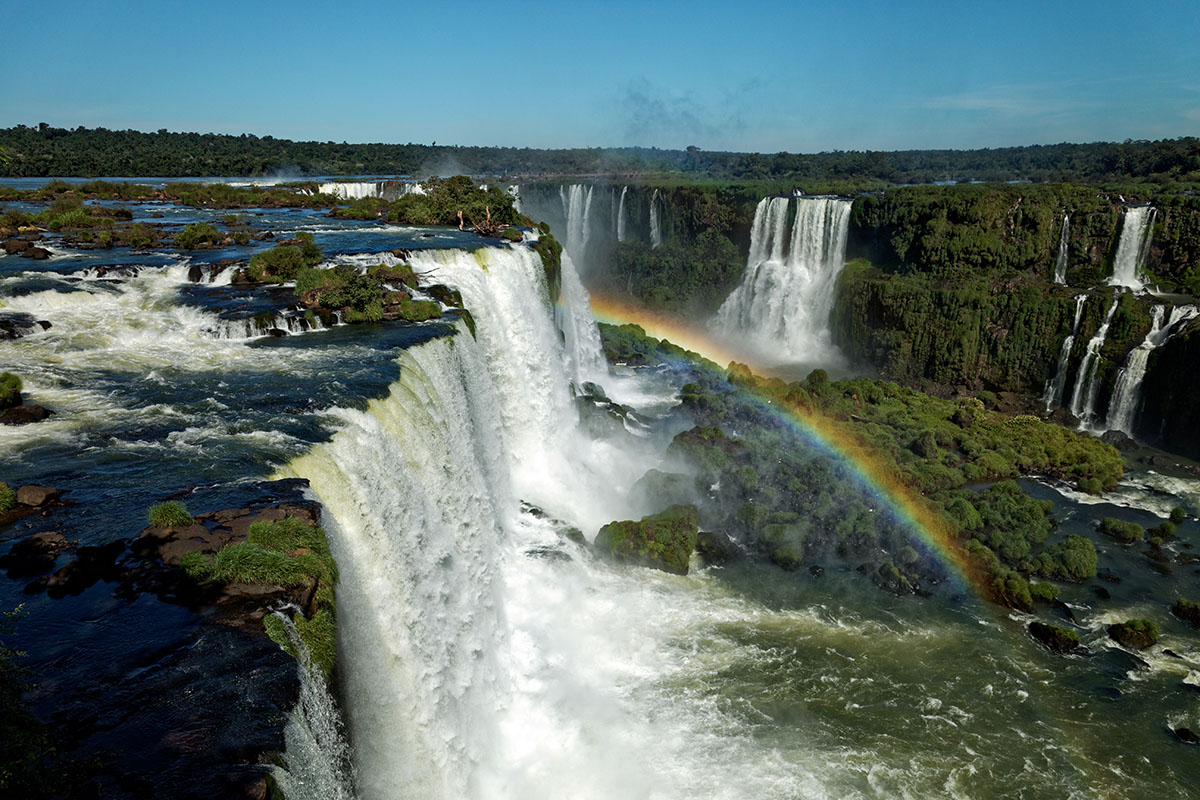
Few sights on Earth prepare you for the first roar of the Iguazú Falls. Spread across nearly three kilometers of subtropical jungle on the border between Argentina and Brazil, this chain of 275 waterfalls is one of the great natural wonders of South America — and one of the easiest to add to any Argentina trip. This guide covers everything you need to plan a visit: where the falls are, how the Argentine and Brazilian sides compare, the main walking circuits, when to go, and how many days you really need.

Where the Iguazú Falls are and how to get there
The falls sit in the far northeast of Argentina, in Misiones province, beside the small town of Puerto Iguazú. This is the tri-border area where Argentina, Brazil and Paraguay meet at the confluence of the Iguazú and Paraná rivers. The town is about 300 kilometers north of the provincial capital, Posadas, but almost everyone arrives by air: Iguazú International Airport lies roughly 25 kilometers from downtown, with frequent flights from Buenos Aires that take under two hours. The Brazilian side is reached by crossing the Tancredo Neves International Bridge. Because the connection from the capital is so quick, most travelers fly up from Buenos Aires for two or three nights — it pairs perfectly with a few days exploring the tango, steakhouses and neighborhoods of Buenos Aires.
Argentine side vs. Brazilian side
This is the question every visitor asks, and the honest answer is that the two sides are completely different experiences — ideally you see both. The Argentine side, inside Iguazú National Park, holds around 80% of the falls and is all about immersion: kilometers of walkways take you right to the edge and the base of the cascades, a small jungle train carries you toward the Devil’s Throat, and you can spend a full day (or more) here. The Brazilian side, at Foz do Iguaçu, is about the grand panorama — a single sweeping walkway across the gorge gives you the classic wide view of the whole waterfall system and is easily covered in half a day. If your schedule allows only one, choose the Argentine side for the up-close drama; if you can, give the Brazilian side a morning for the photographs. Remember that crossing the border may have passport and visa requirements depending on your nationality.
The Devil’s Throat and the main circuits
On the Argentine side the walks are organized into a few circuits, and it is worth understanding them before you go. The Garganta del Diablo (Devil’s Throat) is the showstopper: a U-shaped chasm where nearly half the river collapses into a permanent cloud of spray, reached by a long catwalk over the calm upper river. Go mid-morning for the best light and the chance of rainbows. The Upper Circuit traces the tops of the falls for panoramic views, while the Lower Circuit brings you down to the base, closest to the thundering water, with the option to reach San Martín Island. For an extra thrill, the boat excursions run straight into the spray beneath the cascades. All around, the rainforest is alive with coatis, toucans, capuchin monkeys and clouds of butterflies.
Best time to visit Iguazú
The falls are spectacular all year, so the best time really depends on what you want. The climate is humid subtropical, with hot summers (temperatures often between 20 and 33°C) and mild, pleasant winters. The rainier warm months bring the highest water volume and the most dramatic flow, though after very heavy rain the Devil’s Throat catwalk can occasionally close for safety. The cooler, drier months make for the most comfortable walking and reliable access, with the falls still running at full force. There is genuinely no bad season to come — only trade-offs between water volume, heat and crowds.
How many days do you need, and where to stay
Plan on a minimum of two nights. That gives you a full day for the Argentine side without rushing and a half day for the Brazilian side, plus buffer for flights. Most visitors base themselves in Puerto Iguazú, which has everything from simple guesthouses to comfortable hotels and a couple of genuinely luxurious options. Travelers who want to be first at the Devil’s Throat — before the day-trippers arrive — often choose to stay at the landmark lodge inside the national park itself, which allows early and late access to the walkways when the light is best and the crowds are gone.
Beyond the waterfalls
The falls are the headline, but the region rewards a little extra time. In town, the Hito Tres Fronteras marks the meeting point of the three countries above the confluence of the rivers. On the Brazilian side, the excellent bird park lets you walk among toucans and macaws, while across the river in Paraguay, the bustling market city of Ciudad del Este draws shoppers. Heading back toward Posadas you can break the journey at the semi-precious stone mines of Wanda and the atmospheric Jesuit ruins of San Ignacio Mini. It all adds up to far more than a single afternoon of sightseeing.
Plan your trip to the Iguazú Falls
Getting the logistics right — flights from Buenos Aires, park transfers, a knowledgeable guide and the right hotel — is what turns a good visit into a great one. As a local Argentine agency we handle all of it, and our bilingual guides know exactly when to hit each circuit to beat the crowds. You can browse our Iguazú Falls tours and packages for both sides of the falls, or take a look at our classic Iguazú Falls tour to see what a typical program includes. Every trip comes with our best price guarantee, fast confirmation and direct support by WhatsApp.
The Iguazú Falls belong on every South America itinerary, and they are far easier to reach than most travelers expect. Tell us your dates and we will build the flights, tours and hotels around them. Book your Iguazú Falls tour and plan your trip with local experts at www.01argentina.com.